Learning
AIS Global Intensive: Costa Rica
During the travel part of the AIS Global Intensive Costa Rica: Culture of Conservation course, students explore the country’s remarkable biodiversity and conservation efforts while learning alongside local communities and organizations. Through hands-on experiences, reflection, and time immersed in Costa Rican culture, students deepen their understanding of the relationship between people and the natural world. This post will be updated with highlights, photographs, and student reflections from this incredible journey.
October 13, 2026
Closing Thoughts
Our students are all packed and ready for their return journey in the morning. They are sad to leave a country that has welcomed them so warmly and that they have called home for the last 12 days. At the same time, they are excited and energized to return home and bring with them everything they have learned and experienced along the way.
Below are the final reflections on the experience. Thank you everyone for following along with us on this journey, for your cooperation, and for being part of this experience!
Student Author: Julia
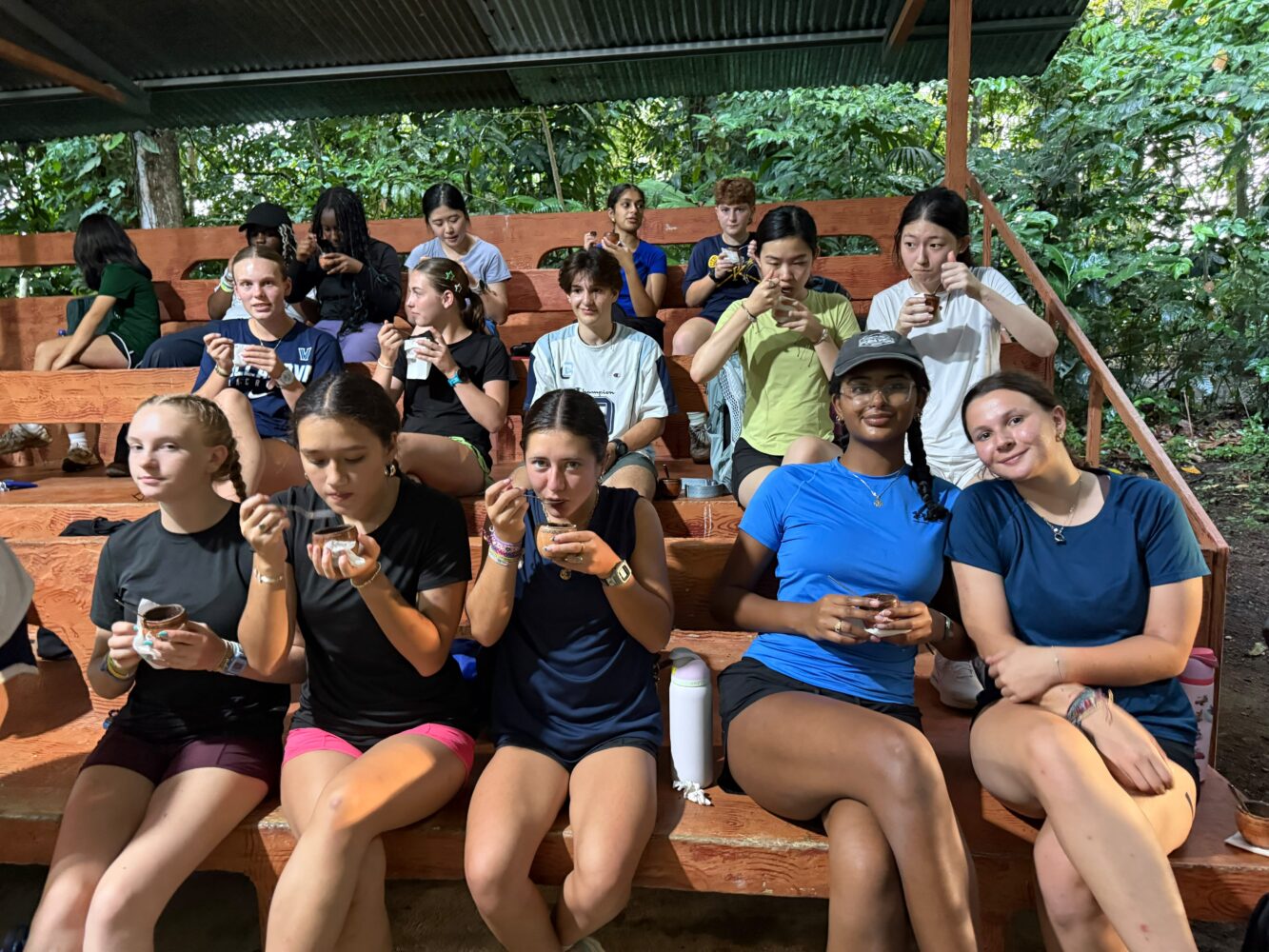
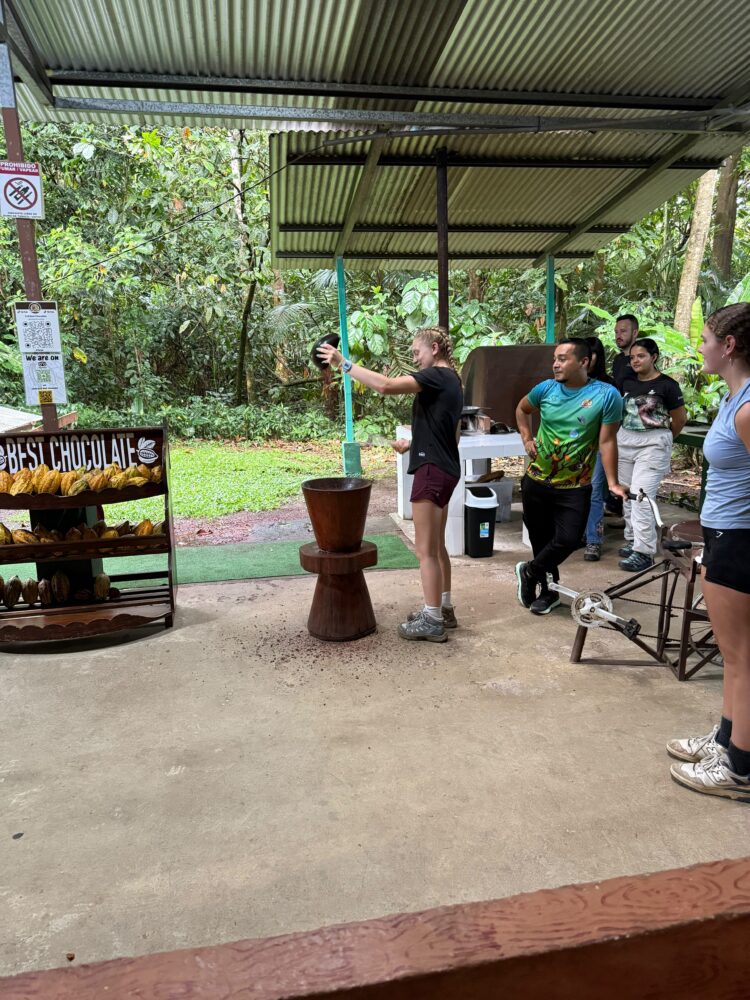
Yesterday at the chocolate tour, I was deeply inspired by what our tour guide at the chocolate tour told us: “You protect what you love, you love what you know”. What he said really spoke to me and made me realize how important educating yourself and becoming informed about the world around us is.
If you don’t seek to get to know about something, you will never get to know it well enough to love and protect it. After saying this, the guide told us a story about a hummingbird who carried few droplets of water at a time to save a burning rainforest while the rest of the animals fled their home. When the animals asked why the hummingbird was even trying – because she was so small – she responded with “Even if it doesn’t make a difference, I am still doing my part.”
By educating oneself and making small changes each day rather than sitting in ignorance, not believing the significance of their actions, people can start to effectively conserve our planet which is something that I will spend time and effort to do.
Student Author: Zahra
In my time in Parismina, I learned how poorly we treat our beaches and environment. We were assigned different trash items to pick up in small groups. I was assigned big plastic bottles. Our teachers sectioned off a small part of the beach where we began to pick up the trash. Before I started cleaning the trash I looked at the whole section and thought we could pick up the trash quickly. After 10 minutes of picking up big plastic bottles I realized we weren’t even half way done. It took us around one to two hours to clean up a small section of the beach. This made me realize how much people buy and spend only to be wasted. A lot of the trash was un-opened or half-used which was awful. Seeing this, I want to change how much I buy, what I buy and if I really need it or not.
Student Author: Ejin
At the chocolate tour, the guide ended the tour with an astonishing speech. He told everyone to think of the idea of YOLO, meaning “You only live once”. Often, everyone prioritizes their own desires over nature because they live with their motto of YOLO, leading to the ignorance of the aftermath of their careless actions. Then, he contended to change our mindset to YODO which stands for “You only die once,” or maybe even more appropriately, you live every single day.
Throughout this trip, we were exposed to different consequences around Costa Rica such as deforestation and use of pesticides. This made me think that if we value the world and nature over our own desire, every single day, we can build a better world. As Porter’s students with a responsibility to shape a changing world, we especially need to be more responsible and take accountability of our actions. Then, we could attain our ultimate goal of shaping the changing world.
October 12, 2026
Change
Student Author: Leanne
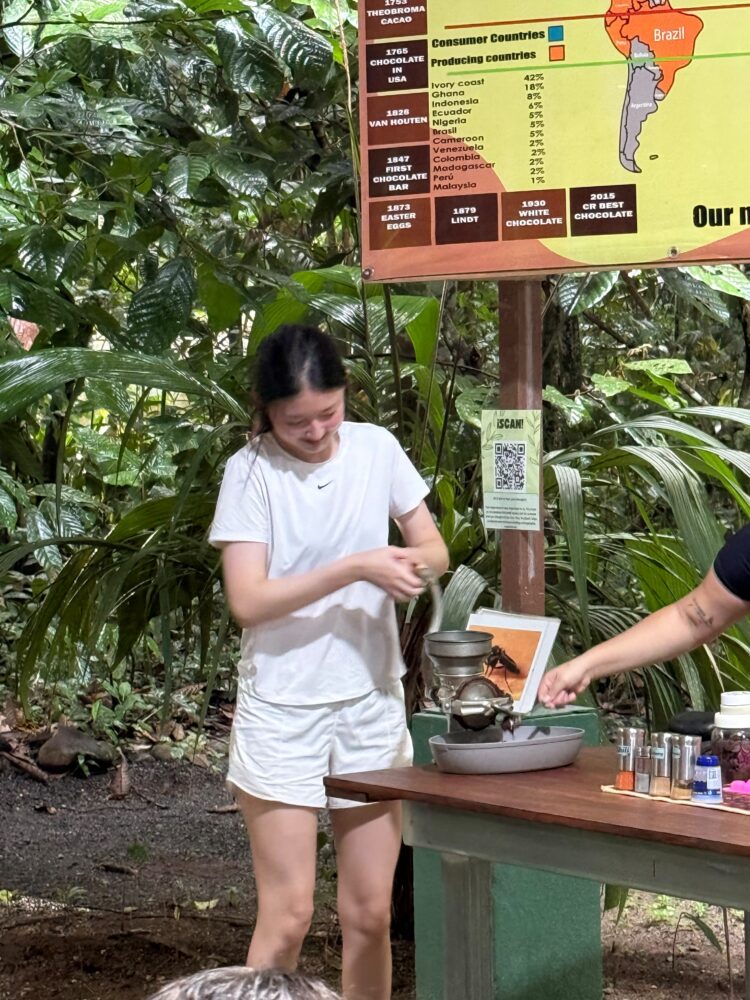
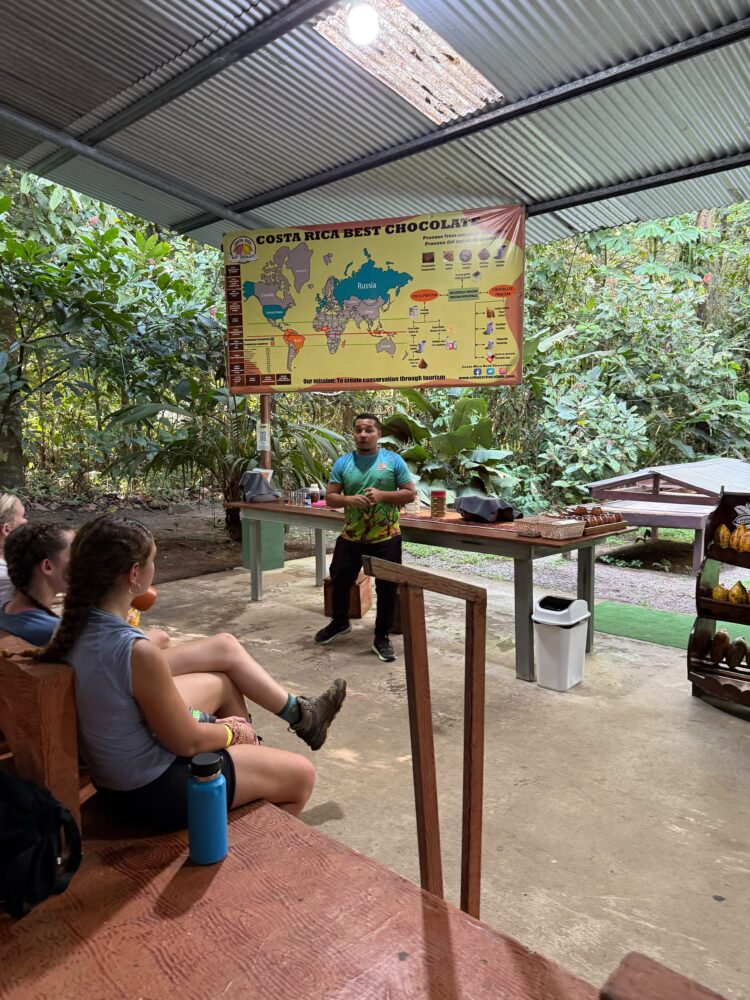
At the chocolate tour, the guide ended the session with a story:
In a forest fire, a hummingbird tries to put it out by bringing drops of water into the forest. When asked why it persists, it explains how the drops of water, although weak on their own, become powerful once accumulated.
This analogy for conservation made me think of a well-known Chinese idiom that also teaches the same lesson. The message is universal for a reason. Small actions are necessary to instigate a wider change.
In the story of the forest fire, the hummingbird represents a small unit. Extending this analogy, other animals, such as elephants, bring more water to put out the forest fire, and can symbolize larger institutions such as the government that can incite permanent change. However, the actions of the hummingbird is the base inspiration to convince other animals to help. Only when we do our own parts can larger waves of change happen. Simple actions can include turning off the lights and A.C. when leaving the room, consuming less, recycling, or simply learning more about flora and fauna in the local area. Every action feeds into a big step towards a more positive future.
October 11, 2026
Tourist Day
Student Author: Dora
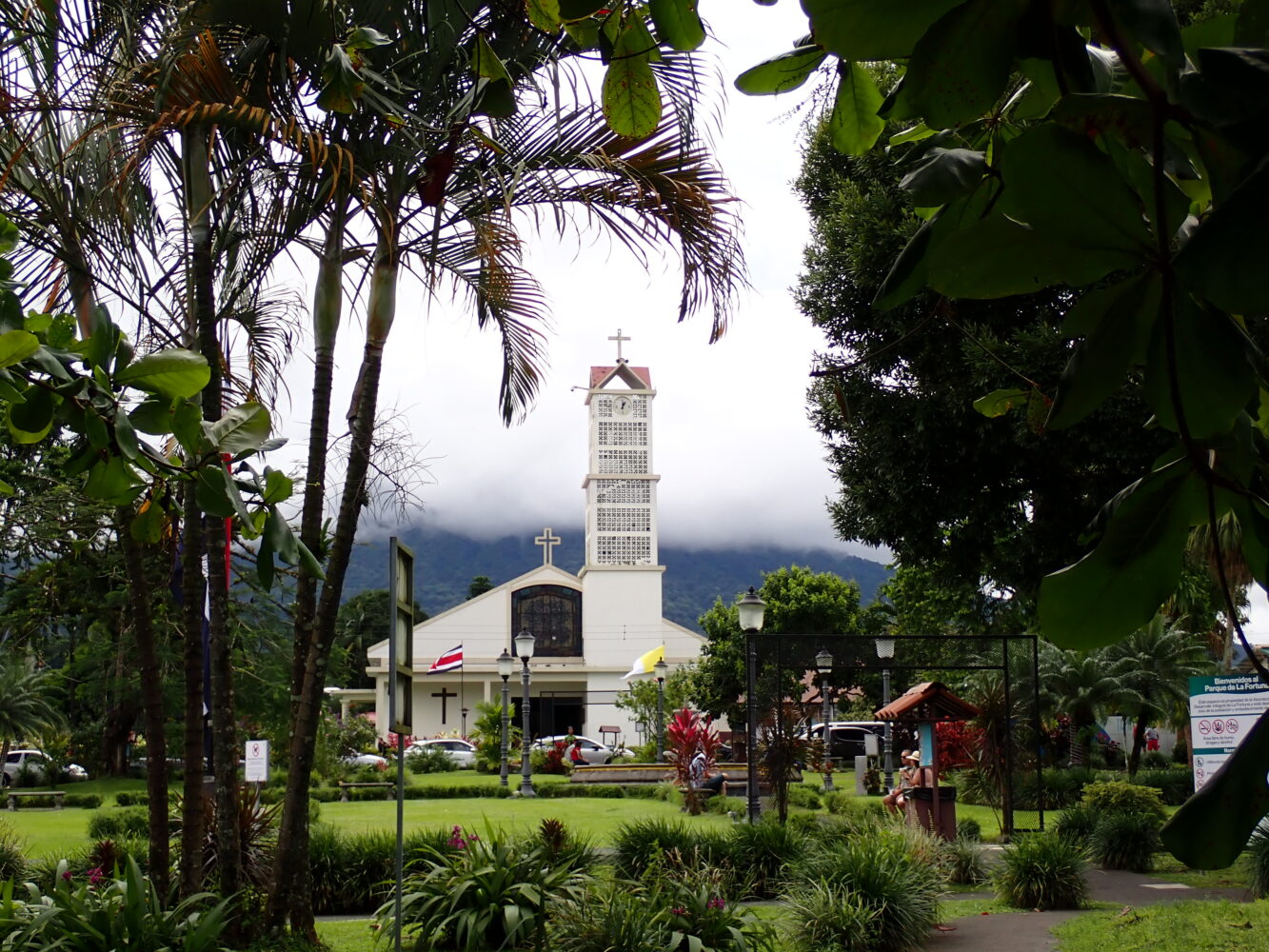
Today was “tourist day” for AIS Costa Rica 2026. The other days at Chilamate, we intentionally focused on being a traveler, learning about culture and conservation from locals. However, we spent a day in La Fortuna ziplining, shopping at souvenir shops, and spending the afternoon at the hot springs.
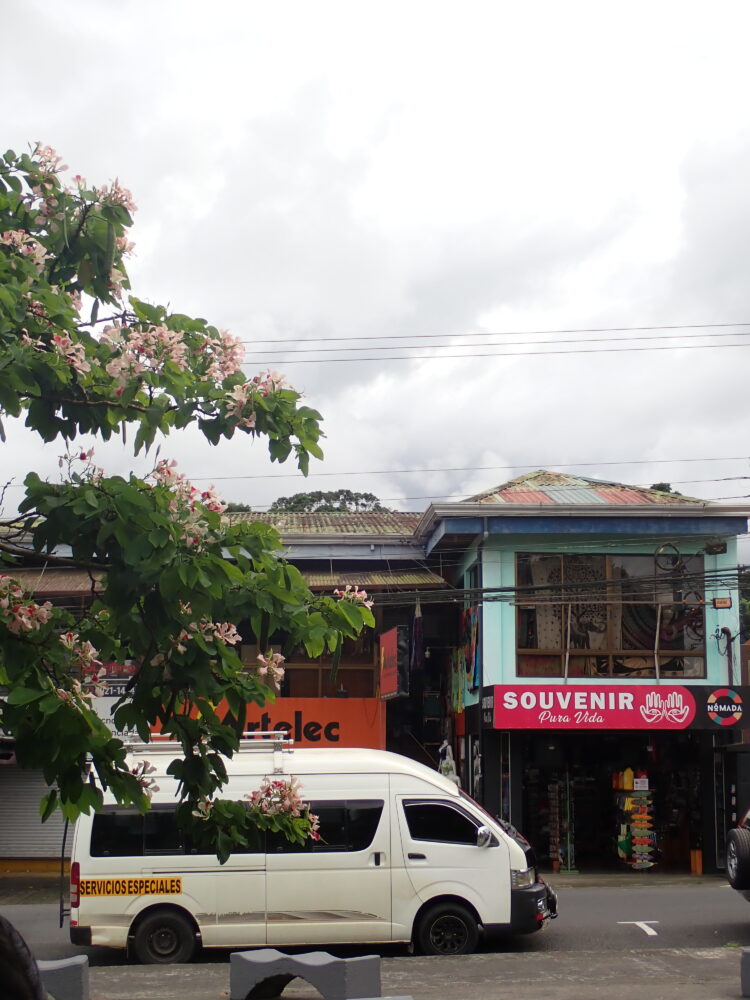
Embracing the tourist mindset on our designated “tourist day”, I walked into multiple souvenir shops at La Fortuna during our afternoon shopping time. Apart from noticing how every shop had the same souvenirs, like license plates that said “Pura Vida” on them and plastic mugs with imprinted pictures of sloths, I also made choices with a tourist mindset. An old man was selling his handmade crafts right outside one of the many souvenir shops we saw on the street, and he talked to us in Spanish, advertising his crafts. Instead of supporting and prioritizing local businesses as I have on any other day, I walked right into the souvenir shop across from the old man and walked out with a plastic mug that says “Pura Vida” as a gift for my dad. I inscribed myself into La Fortuna as a tourist today, and my actions, buying mass-produced products and factory-made items, contributed to consumerism. Not just me; almost all of our class ended up in the “tourist information center” area by the end of the afternoon shopping time. When reflecting on our actions today, we might think it’s only a day of being a tourist; what impact could there possibly be? However, thinking about my actions from a different perspective, today might have been a day of little to no income for the man selling crafts.
Only by reflecting upon this do I realize how our smallest actions as tourists unintentionally impact the local economy. We integrate ourselves into this world with intentions, and our individual actions, along with their intentional and unintentional impacts, contribute to the universal problem of how easily we can harm the local economy as tourists unknowingly.
Student Author: Alicia
Being a tourist is not inherently negative, a stereotype we challenged in our first few days in the Global Intensive classroom. We spent a period highlighting the differences between being a tourist and being a traveler, assigning adjectives to the divided sections on the whiteboard. A majority of the class carried the mentality that to be a tourist was to be a nuisance, but that thinking failed to acknowledge the pros of tourism. We went on to discuss how tourism can appeal to a wide audience to contribute to and benefit the economy.
However, as I walked through the four or five consecutive souvenir shops on a street in La Fortuna, I noticed the sameness of the items. Magnets, stickers, water bottles, socks, hats, and shirts were just some of the items that were identical from store to store. It begs the question: how impactful is this contribution to the economy? Who is the money going to, and what trend is it enforcing? A local artist didn’t stuff the hundreds of sloth keychains we came across. I’ve seen the same ones in many countries and many other gift shops. Yes, souvenir shop owners make their own profit from the items they sell, but a lot of the money we spent today is likely paying out-of-country factories that produce these bucket hats, fridge magnets, and hibiscus-themed flip-flops. The economic impact is very different than supporting the artist selling her own paintings at the Migratory Bird Festival yesterday. The money she received goes to her and her family to continue circulating within the Costa Rican community, not to a third party.
Walking through the volume of generic souvenirs made me contemplate just how many of these items are produced annually, slapped with Pura Vida, Virginia Beach, or Puerto Rico, and sold globally. How many times have I received a fridge magnet from one of these places only for it to collect dust or be discarded sometime down the line? How many of those have leaked from landfills and landed right back on those beaches? These shops are not all bad, but they do reflect a broader culture of over-consumption and lack a unique Costa Rican identity. As we learn more about climate change, conservation, and Costa Rican culture, it is becoming increasingly important to be intentional with how we engage with tourist attractions.
October 10, 2026
A Community Passionate about the Environment
Today the groups went back to their rotations working with the different research organizations. They also attended the III International Festival for World Migratory Birds, hosted at Lapa Verde, where they celebrated with the local community. These are the reflections for the day.
Student Author: Kennedy F.
Today the class visited Lapa Verde for their World Migratory Bird Festival. The reserve’s main campus had been temporarily converted to a fairground open to the public with craft stalls, food, yard games, and live music. It was beautiful to see the community gathered together to celebrate and give back to nature in such a playful and bonding way. The food stands selling pinchos (meat kebabs), ice cream, and slushies all contributed their proceeds to the conservation efforts. Even the live music was centered on how the world and nature play such a valuable part in our lives, with one of the singers incorporating animal noises and bird calls into her music.
It was amazing to see a community so focused on a common effort. Their passion for conservation was infectious, and it was really inspiring to see the tangible impact it had on the rainforest and animals around us. Despite language barriers, all of us were able to be involved, talking with vendors about their crafts and playing yard games with the local kids. Even when the ice cream vendor spent five minutes trying to explain what the choco-miel flavor was, it was a moving moment to experience how much they all cared.
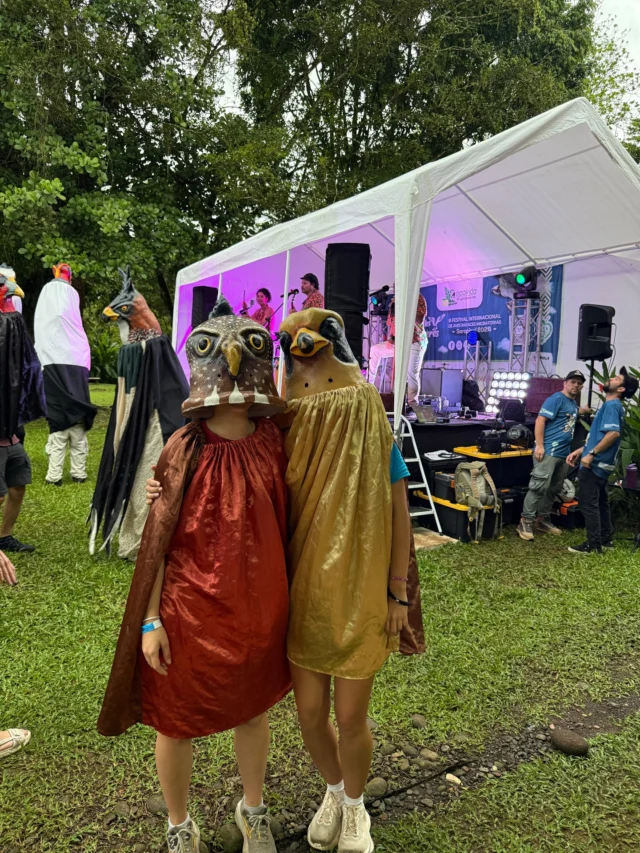
I am so grateful to have the opportunity to step out of my comfort zone, communicate, and learn; the chocolate peanut ice cream ended up being worth the challenge too! After around an hour, a reggae band called Leche de Coco started up, and we got to experience a really special part of culture. Hand crafted bird masks with long cloths attached to look like feathers were taken out and the locals got to put them on and dance; little kids and parents alike experienced this together, and even some of us participated! Kennedy J, Claire, Paloma, and I all dressed up in costumes and danced to the music. Even such a seemingly simple fun activity makes such an impact. I truly am so impressed by how the community here is all dedicated to conservation efforts. It shows us firsthand the impact we have on our own communities and the larger impact they have on the mindsets and culture, sparking real change, just like Lapa Verde and their effort toward migratory birds.
Student Author: Kennedy J.
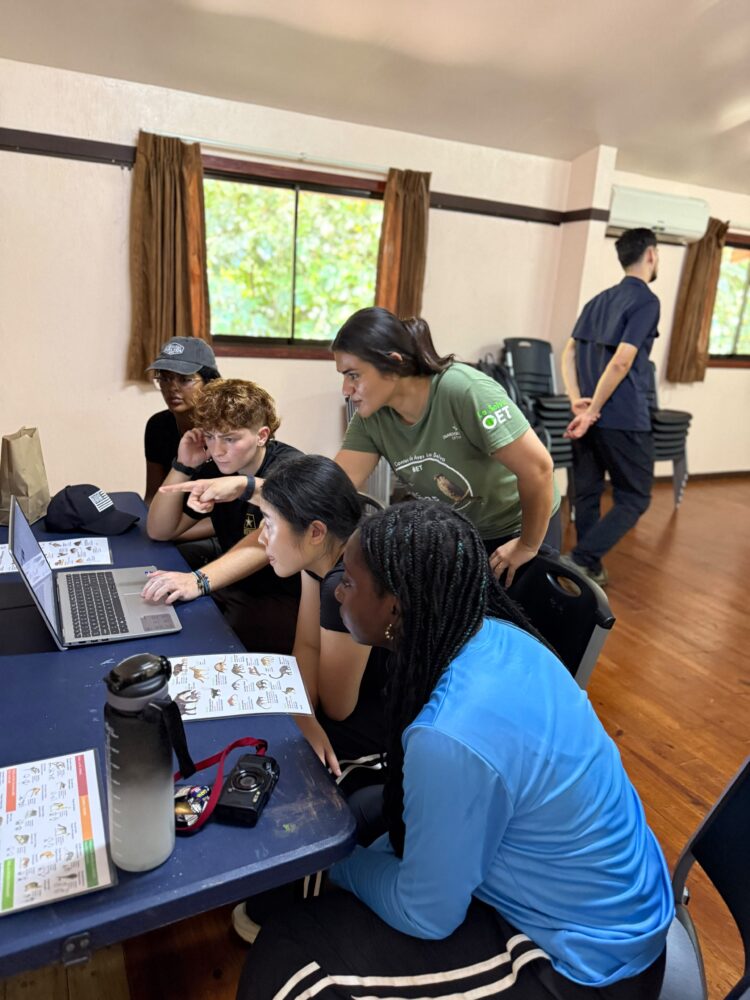
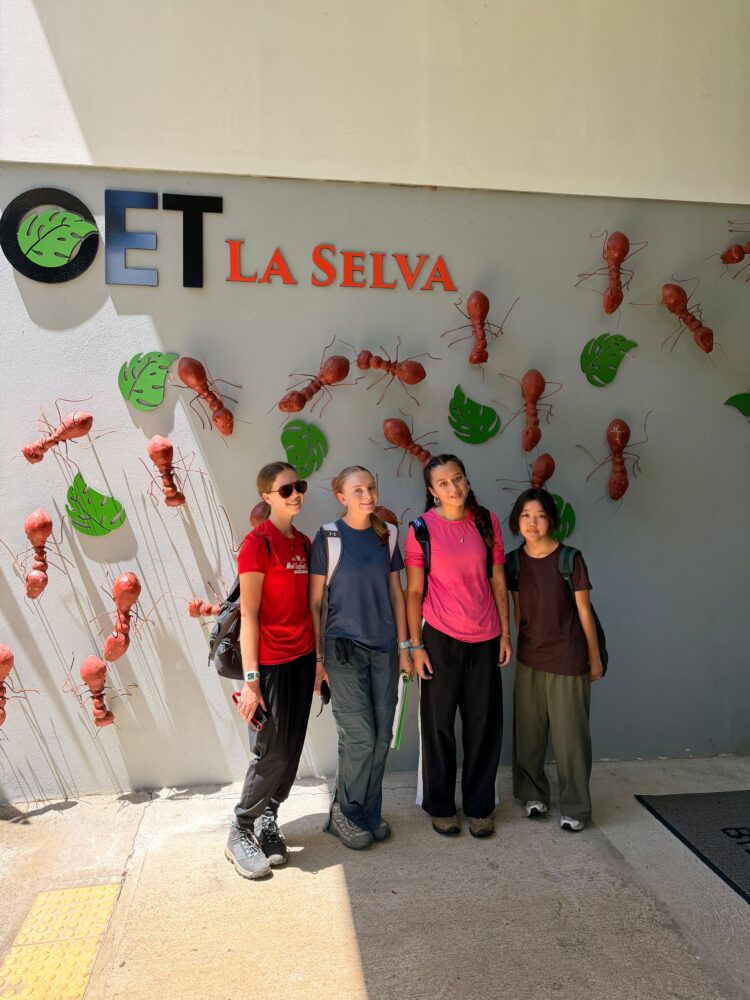
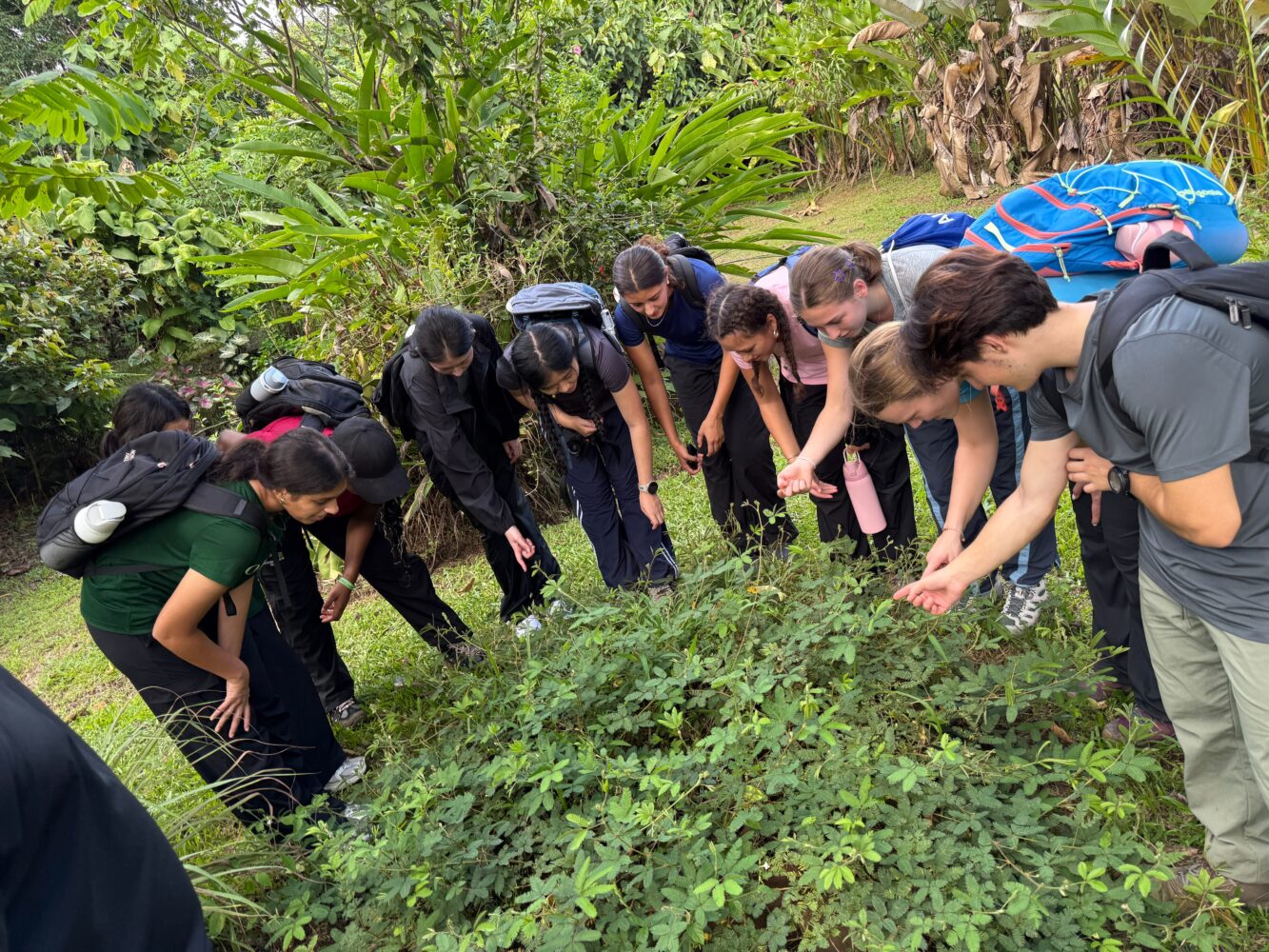
Today my group visited La Selva and participated in a workshop about invasive species and the impact they have on environments across Costa Rica. We focused mainly on the tropical rainforest in La Selva but briefly explored invasive species across other locations. Our guide gave a brief overview of the invasive species that can be found specifically in La Selva and the ones that are the most aggressive/have the biggest impact.
My group went for a walk to identify and log invasive species present in La Selva. We logged over 5 different species with a total of 120 plants during a 45 minute period. Doing this activity made me aware of the impact that these invasive species have on developing ecosystems. Whether they were brought intentionally as a form of pesticide or accidentally, they cause damage that lasts forever and is irreversible. A main issue invasive species have on ecosystems is that they take up land, resources, water, and habitats from native species, which can impact the natural flow of the environment. There is a perspective, though, that these plants provide homes and shelter for animals, but the damage they cause doesn’t equal the support they can provide.
Invasive species have an unintentional negative impact on the ecosystem, but we can have an intentional impact with a goal to focus on removing them to improve conditions and conserve natural resources. We can also choose to use these invasive species in a controlled way, such as on farms and in regulated settings. Humans also tend to move these species for their benefit; an example is vanilla and cacao, which are native to Latin America but are grown mostly in Africa due to the higher economic benefits and profit. Overall, learning about invasive species and the vast effects they have across many areas was intriguing and brought light to how transcontinental agriculture impacts natural environments.
Student Author: Ife
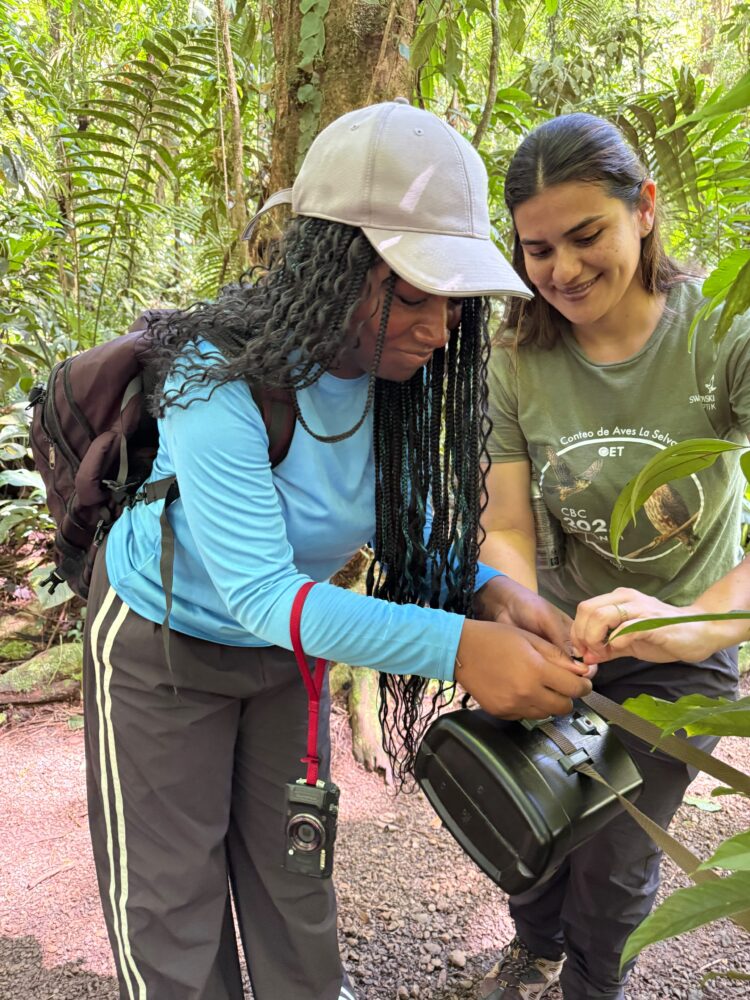
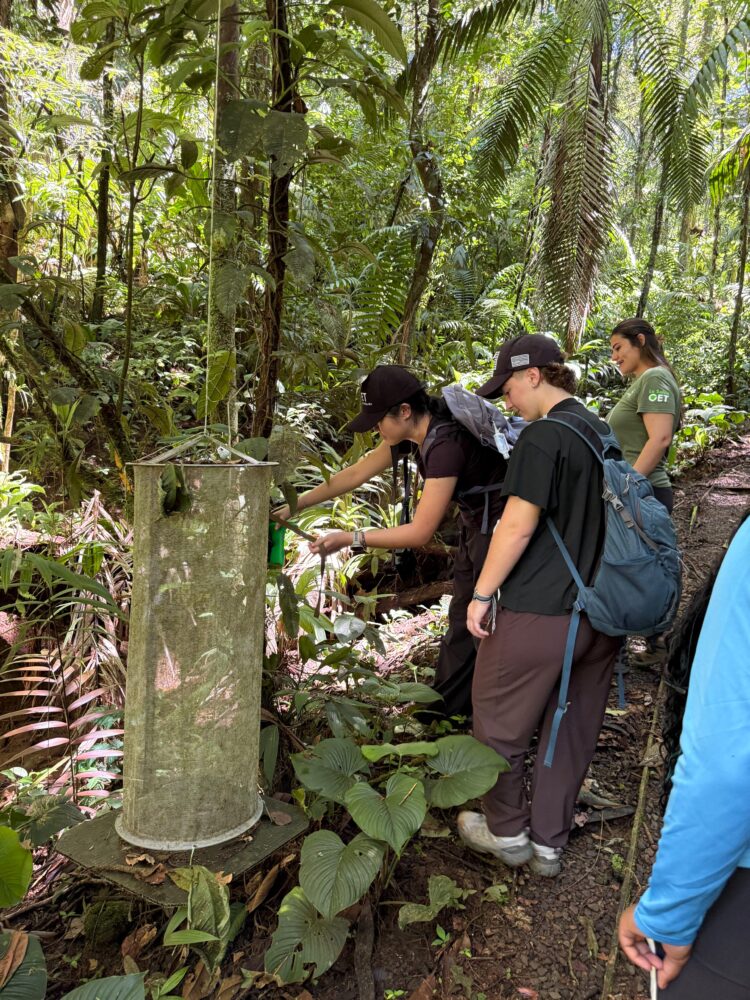
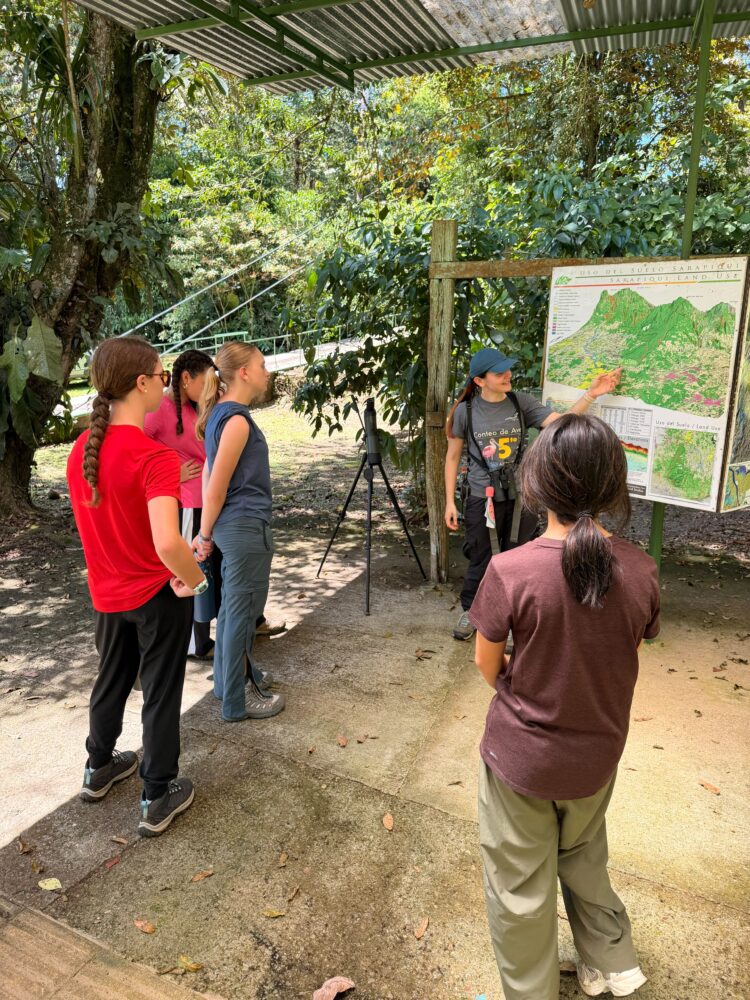
During my group’s trip to Tirimbina, we looked at camera traps and some ideal conditions and locations to set them up in. Our instructor’s presentation introduced us to them, and I thought it was interesting how she mentioned that not all of the reserve is used for tourism; only a small percentage of Tirimbina is used for that purpose, whilst the majority is for conservation and protecting the wildlife that surrounds it.
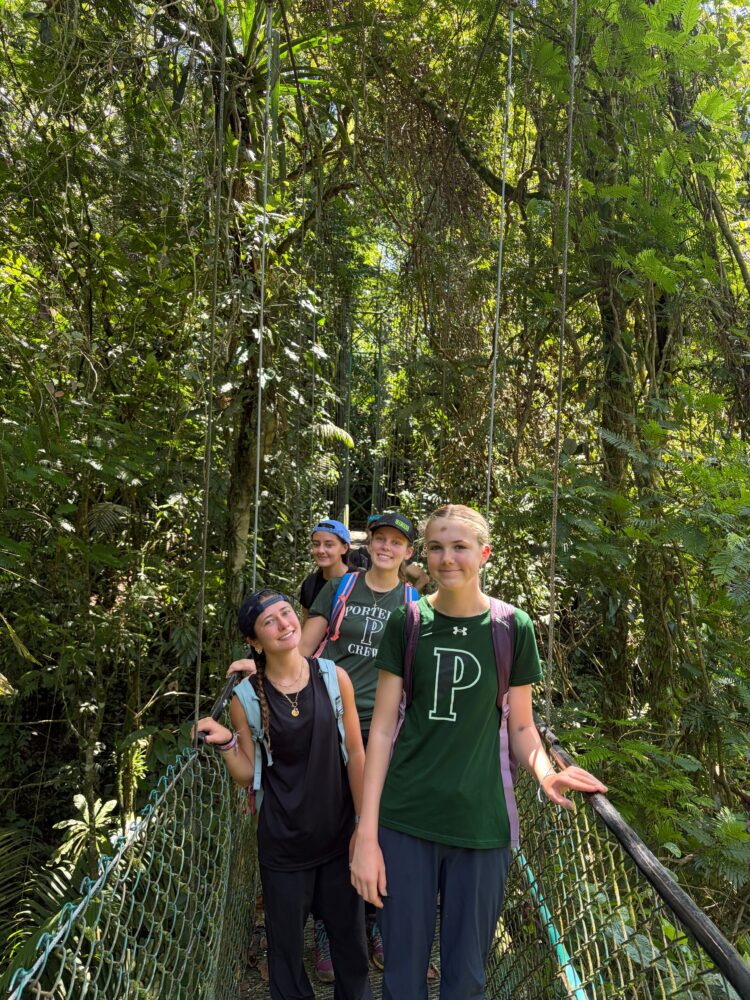
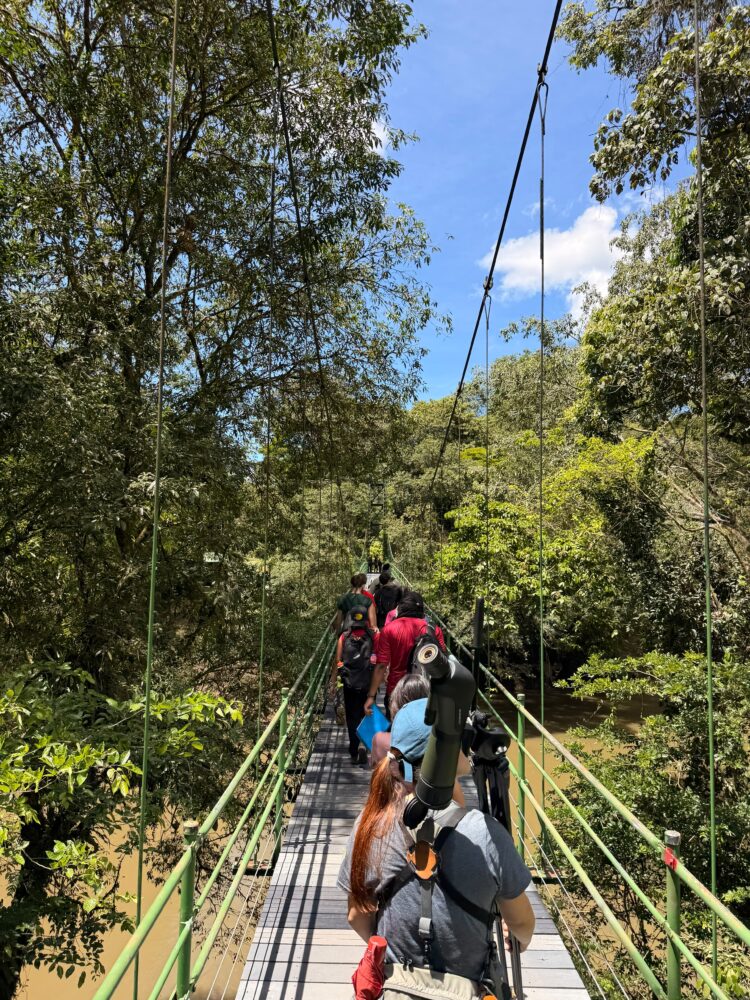
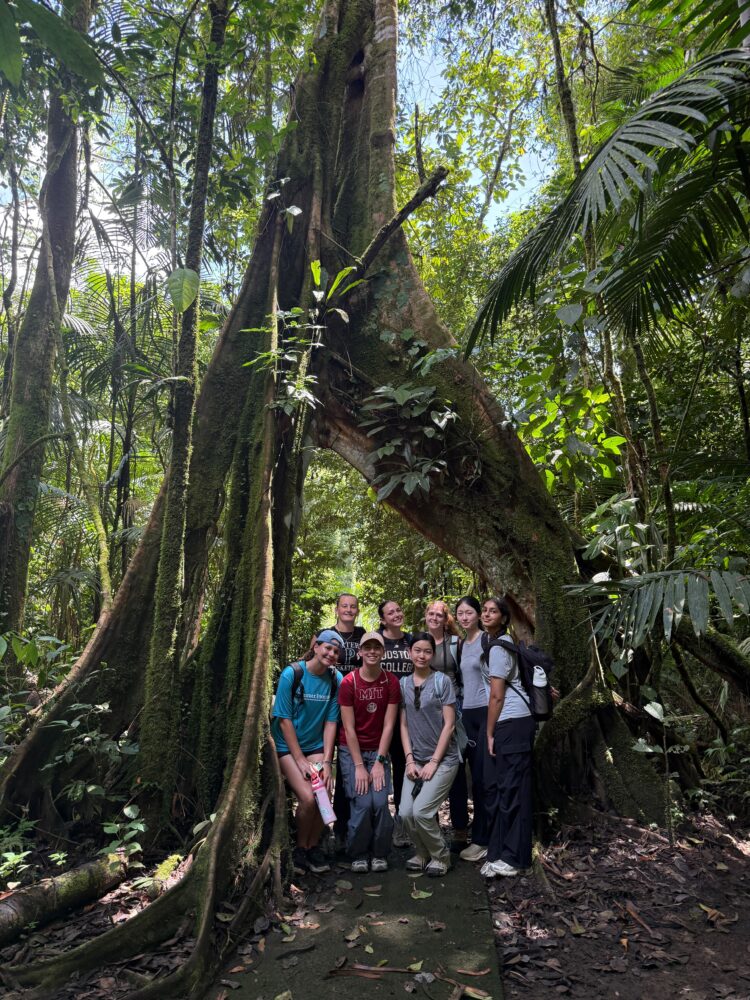
Then, we took a walk across the longest hanging bridge in Costa Rica, which looked over the Sarapiquí River and some of the trees in the reserve, walking along trails, observing the wildlife around us, and looking for locations to set up our camera traps. Although they had concrete trails that ran throughout the park, they made sure to preserve as much of the natural landscape as possible, and our instructor could still easily point out a biodiversity of birds, spiders, and lizards that coexisted with the human presence in the park.
For this reason, I thought it was really beautiful that they could display such a passion for not only sustaining the natural environment, but also for observing and learning from it by using camera traps. I would even say that the fact that they built trails shows how they want to share their passion for wildlife with as large a demographic as possible from all parts of the world.
As we neared the end of our trip, my group’s instructor led us through a blind walk in the rainforest; we were told to close our eyes, hold onto the shoulder in front of us, and focus on what we could hear rather than just what we could see. I think this was a great way to round off our tour because we couldn’t hear the same urban sounds we’re used to hearing at home. Rather, there were birds and the sounds of the river, and it helped me see what the products of true conservation could look like.
October 9, 2026
Thoughts from Parismina
The group is back in Chilamate after their two-day trip to the Caribbean coast in Parismina. Here are their reflections after their return.
Student Author: Ewa
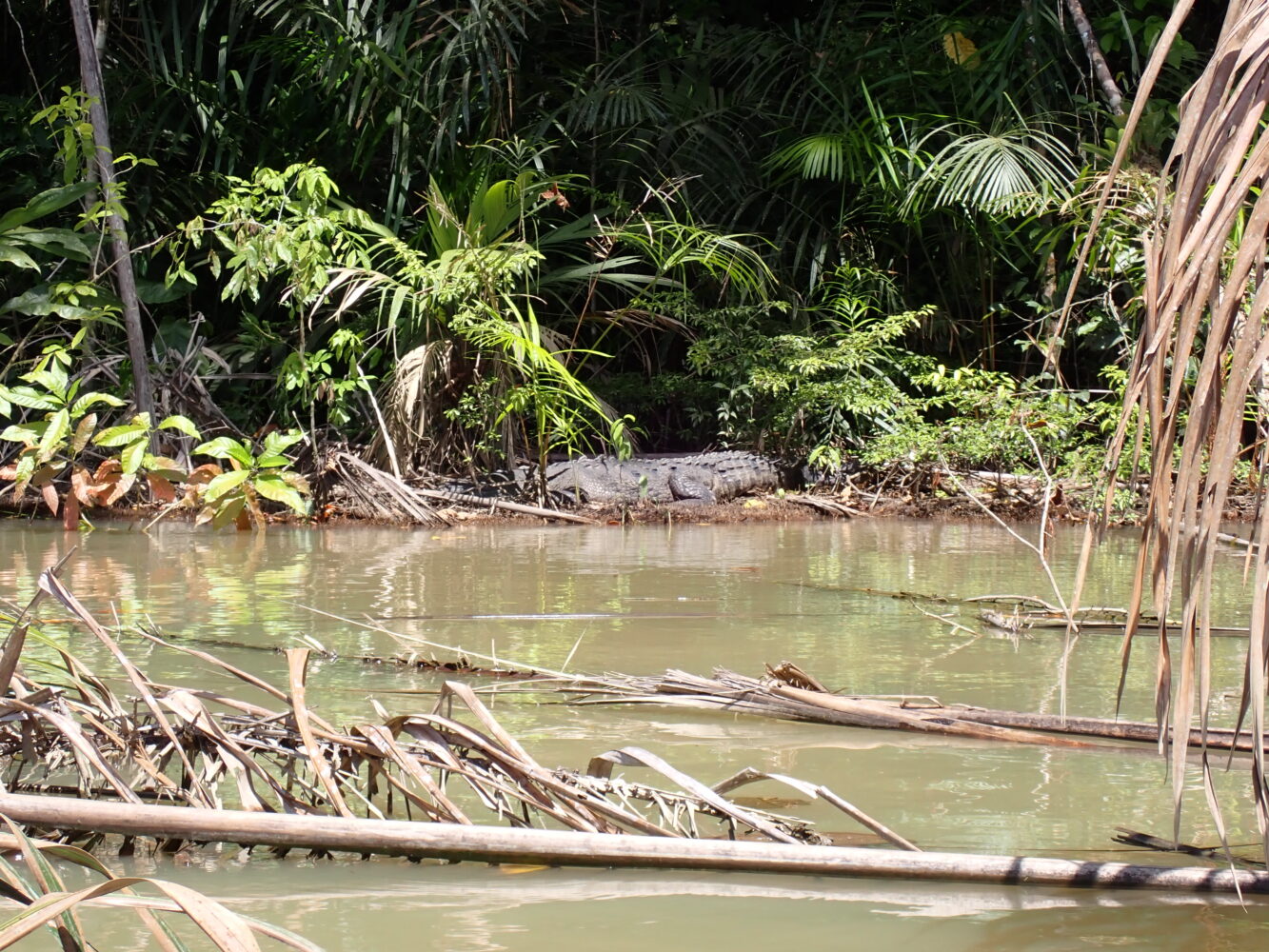
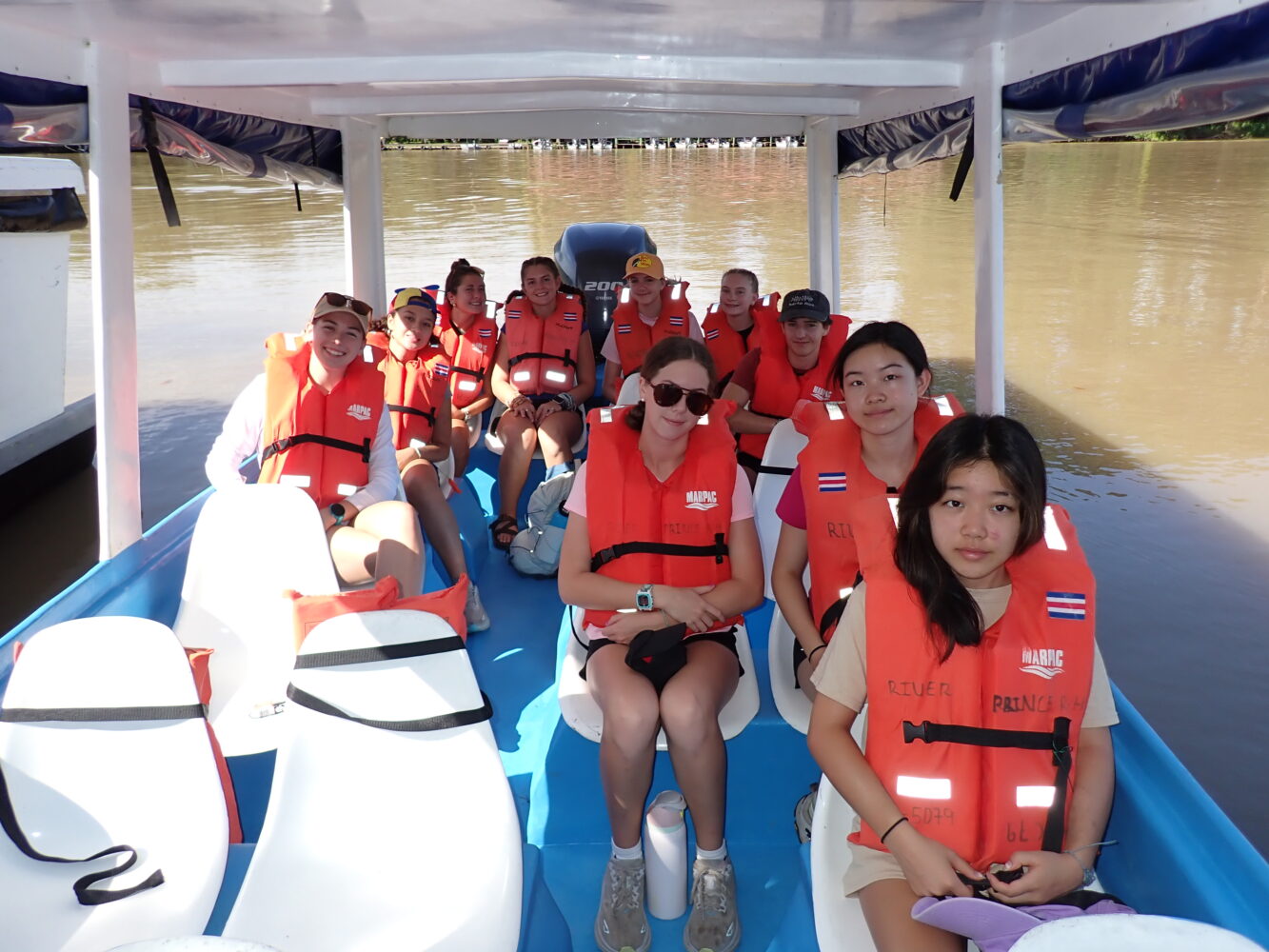
During the boat tour, there was one specific moment when I think we saw that there are both positive and negative impacts on the environment around us, whether that be intentional or unintentional. While we were on the boat, Jerry talked about the use of renewable energy in Costa Rica, and I think everyone is originally provided a positive perspective towards the use of green energy because of the disadvantages of non-renewable energy, such as the release of carbon dioxide and other harmful substances that are released into the environment, such as acid rain. However, Jerry showed us that there is also a negative impact to green energy, especially when it comes to putting dams into rivers. Although hydroelectric energy is renewable, it traps a lot of sediment which causes the river to become brown. When we went through it, the whole entire river was brown. The impacts of dams on natural bodies of water was something that I was definitely unaware of, because renewable energy is seen as the better option. Despite the damage it causes, it is an intentional thing that we decide to do that impacts the environment around us.
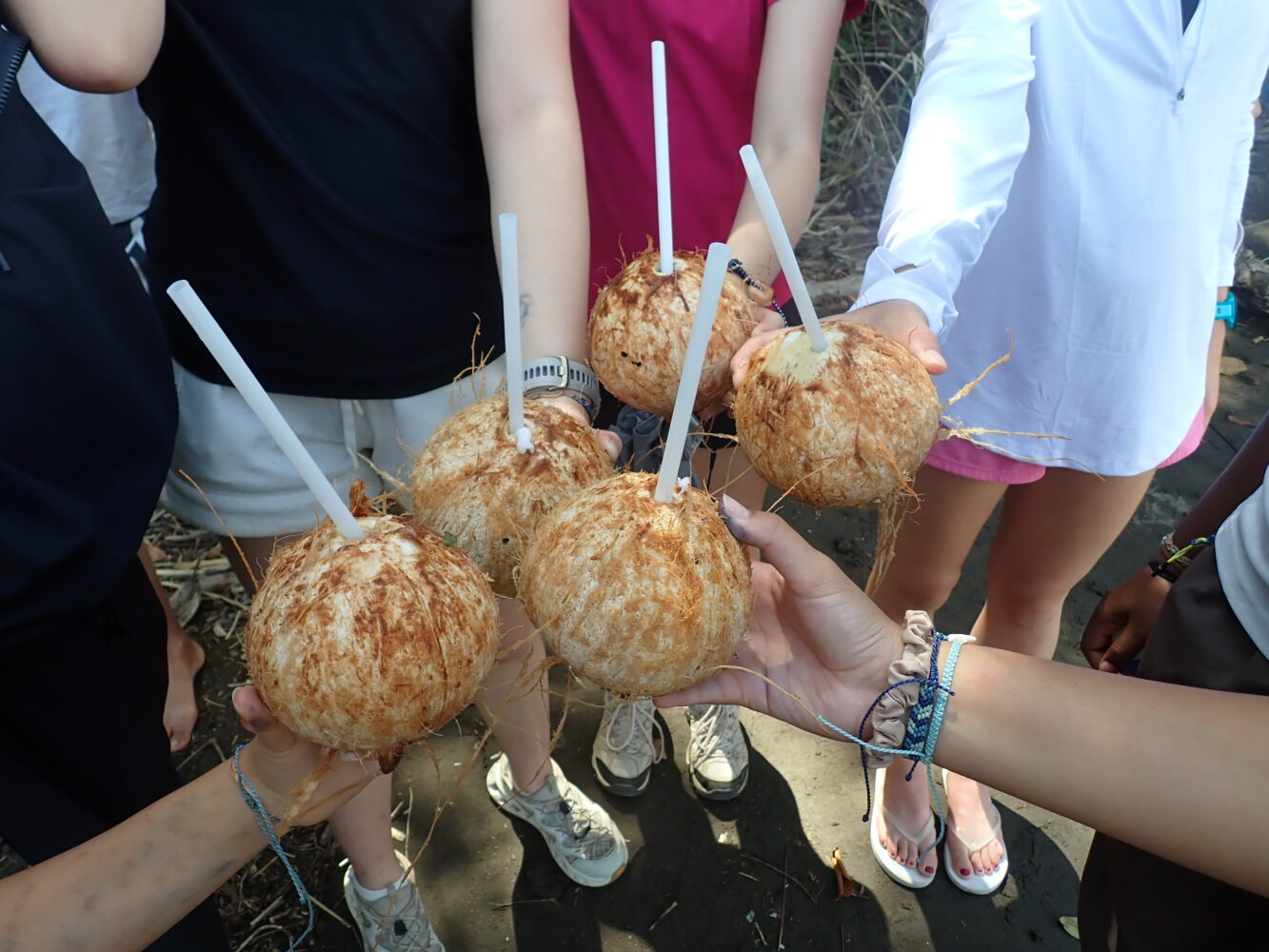
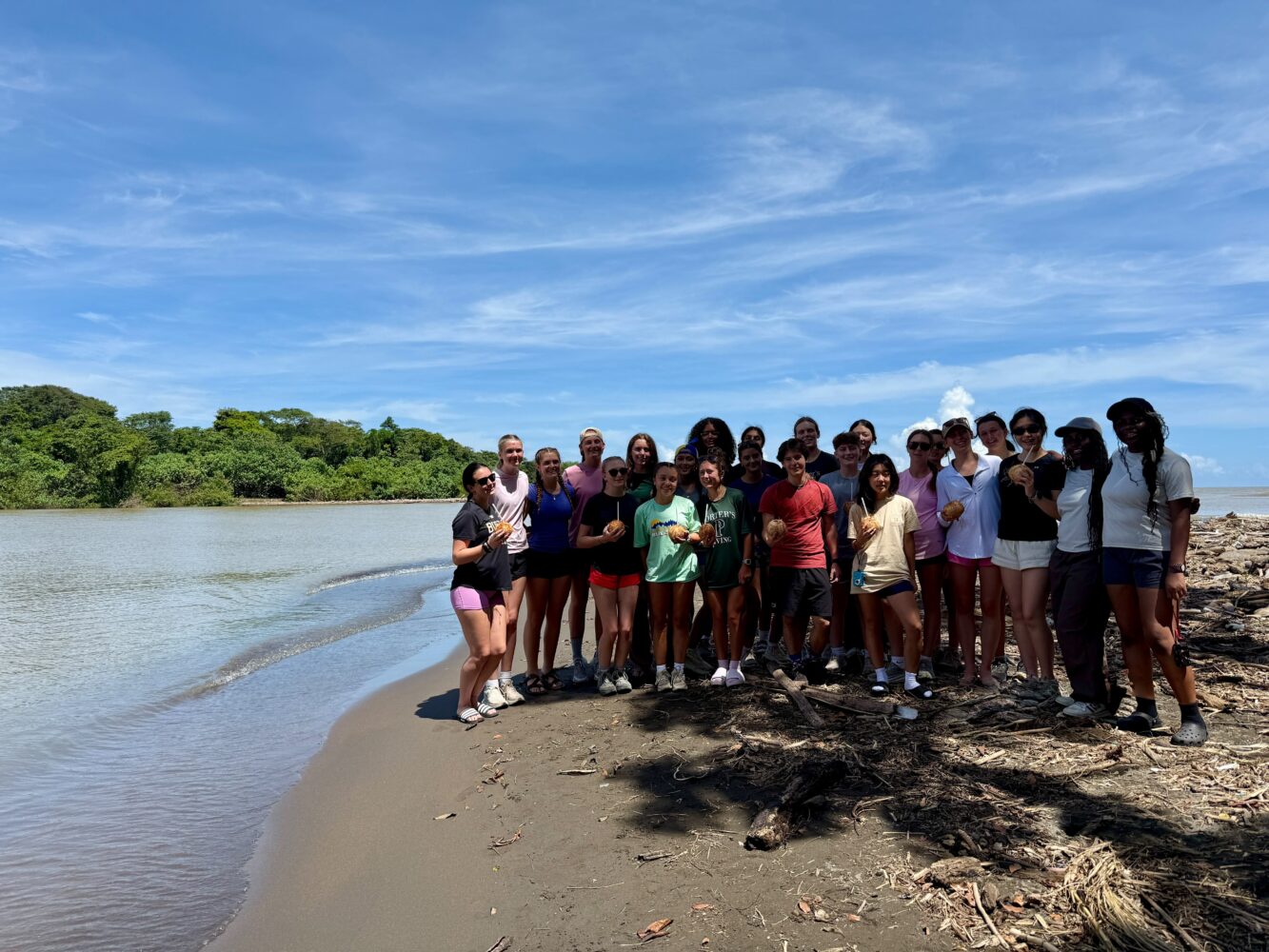
But something that was really interesting and important to note was that we can also be positively intentional about what we do, using Mag and Jerry as an example. Throughout the boat tour, although a small detail, I found it interesting that Jerry was so easily able to spot animals along the shore and name all of them from memory. That showed that he pays attention to the environment and how it behaves. He also generally knew a lot about all the things he talked about today, which shows how mindful both he and Mag are in regards to the ecosystem around them (this was also reflected in the words they said when we were about to leave as well). Something else that Mag showed us was that the straws they gave us to drink the coconut water were 100% compostable, because they were actually made from sugar cane and they weren’t the uncomfortable feeling of paper straws either. It shows that although there is a solution, we sometimes intentionally ignore it. It was inspirational to see because although I was aware of the surface level facts about things like conservation, I don’t think it occurred to me to think as deeply as Mag and Jerry do. Most of the time, the consequences that my actions have on the environment don’t really cross my mind that much, but you could tell Mag and Jerry were really intentional, which is what I aspire to be like some day.
During the words that Mag and Jerry shared with us, they reminded us that as United States citizens, we use up an average of 8 hectares of land per year, in comparison to the 2 hectares that the average Costa Rican local is using. It shows that in countries like the U.S., we are unintentional in what we do because we aren’t really shown the impacts of our actions, nor do we have a connection to the land we live on. However, in Costa Rica, you can tell that the community makes up the land and that the locals care for and respect the land that they live on. They act in a way that is positively intentional, and we as US citizens should strive to act like that. That was one of the biggest takeaways from our time in Parismina that is especially important.
Student Authors: Carmela and Louella
Today we learned the impact of how the chemicals used on plantations can negatively affect the ecosystems around it. While we were on the boat tour, Mag told us how the river has been altered over the years due to pesticide run-off. This run-off changed the depth of the river from 30 feet to now five feet deep because of sedimentation. Animals like bull sharks and other fish had originally lived in the river before sedimentation had transpired. This creates a real world example of how humans can severely change an entire ecosystem within decades while displacing animals from their homes, forcing them to relocate, and adapt to survive.
The community in Parismina seemed to be tight-knit in comparison to Chilamate due to Parismina being a small island, therefore a community that is in unity. Whereas Chilamate is more of an urban area with double the population and other resources that are easily accessible. The residents in Parismina seemed to support each other by creating a dining hall for the elderly and a school where children can have free breakfast and lunch during the weekdays. Most of the chefs are citizens of the community who volunteer, demonstrating the passion they have to give back to the town that raised them. Also, the island was so small that we were able to walk around the entire town in 20 minutes. Along the way, residents and their dogs sat outside their porches greeting you with warmth. By the second day, we had known where all of the shops were and how to navigate where we were going. Another detail about Parismina that is different from Chilamate is that the government creates low-income housing for people who do not have jobs and/or single mothers. If they have land but not enough money to build a house, the government will build it for them. Also, there is a free, local urgent care for residents who do not have insurance or cannot afford it. The doctors treat the patients, and if they cannot afford the appointment or medicine, they work out a plan for the people to be able to pay it over the years.
October 8, 2026
Student Authors: Paloma and Claire
Every day we use plastics and single-use items without thinking about the impact that they have on our ecosystems. In Costa Rica, we see this through multiple different lenses. In Parismina, we learned about the impact that plastic has on the island; while walking down the streets and on the beach, it is apparent how much plastic there is. During our first day in Parismina, we were educated on the effects that plastics have on sea turtles in the ocean, the largest cause being commercial fishing.
Commercial fishing has a huge impact on our oceans and the animals that rely on them. The ocean produces more than half of the oxygen in the world. Without it, we as humans wouldn’t be able to survive. The fish that we buy in markets – especially canned tuna – aren’t sustainable. The labels we see claiming to be “sustainably fished” usually lack the right precautions. If humans aren’t staying aware and alert of our actions, the outcome is devastating. Commercial fishing has multiple negative impacts on our oceans: the nets scrape across the bottom of the ocean floor – known as bottom trawling. Bottom trawling destroys the coral reefs and the life that thrives on the ocean floor.
Another effect that commercial fishing has is the nets it uses. These nets use large amounts of plastic that end up in the ocean, strangling and getting caught in animals’ mouths and stomachs. Last, but certainly not least, bycatch is a huge problem this industry has. Bycatch is the accidental catch of animals. So when these huge ships go out with nets that scrape the bottom of the ocean floor, they catch animals they didn’t mean to catch. Millions of sea turtles, sharks, dolphins, fish, etc., are caught and die. This is a multi-billion-dollar industry, so finding solutions to it is extremely challenging. The industry provides jobs for millions of workers, and fish is a very common food for people to eat. The solution to it is complicated but simple: stop eating fish. Now, this might seem like an impossible task, and we don’t mean to stop eating all fish. Knowing where your food is from is extremely important. Going to the store and just grabbing canned tuna off the shelf and not checking where it’s from is the main problem. The negligence of humans is the main cause of the plastics and the negative effects on our ecosystems. As humans, all we can do is be as aware as we can of our actions and how they affect our Earth.
While walking on the beach in Parismina, it was eye-opening to see firsthand how much trash was washed up by the ocean, and it doesn’t even come close to the amount of trash on some beaches. When the first group came back from their first beach cleanup, we heard that they found a T.V. and a refrigerator door. During our rotation of beach cleaning, it was very sad to see how much trash can collect on a small beach. We don’t realize that many of the single-use products we use daily end up on these kinds of beaches. We as humans need to be more conscious of the decisions we make to use these products when we could be using reusable products as replacements. When we use these single-use products, they often end up in oceans before ending up on a beach. Many animals see the plastic and think that it is food and often end up consuming them. When the animals consume them, the plastic does not digest, leading to a bowel obstruction. When this happens, the animal can no longer consume any more food because there is no more space in the stomach, and they end up dying of starvation.
In conclusion, as humans, we need to learn to immerse ourselves within the ecosystems and deepen our understanding and our connection with the earth. We are a part of the world, not above it.
Student Author: Bella
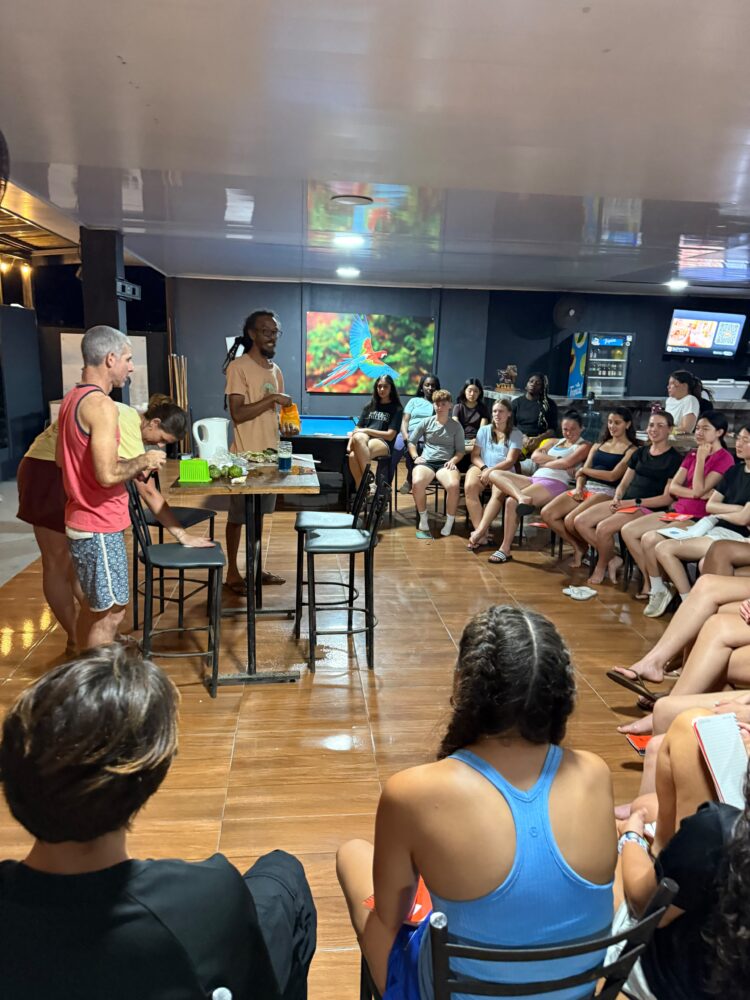
Today we learned about sea turtles. We learned about their life cycle and their mating habits, and that it can take from 17-25 years for the females to be able to reproduce. We also learned about the many threats the turtles face. One big one that humans contribute to is commercial fishing. Commercial fishing is fishing with really big nets that catches the fish and all the fish that come in contact with it. This negatively impacts the turtles because they get caught in the nets which can kill them or they will not be put back into the water. One good example of this is canned tuna fish. Many turtles lose their lives because of the high demand of tuna. After I learned all of this I have decided that I will research further into the food items that I eat and how they affect the ecosystem.
October 7, 2026
Parismina
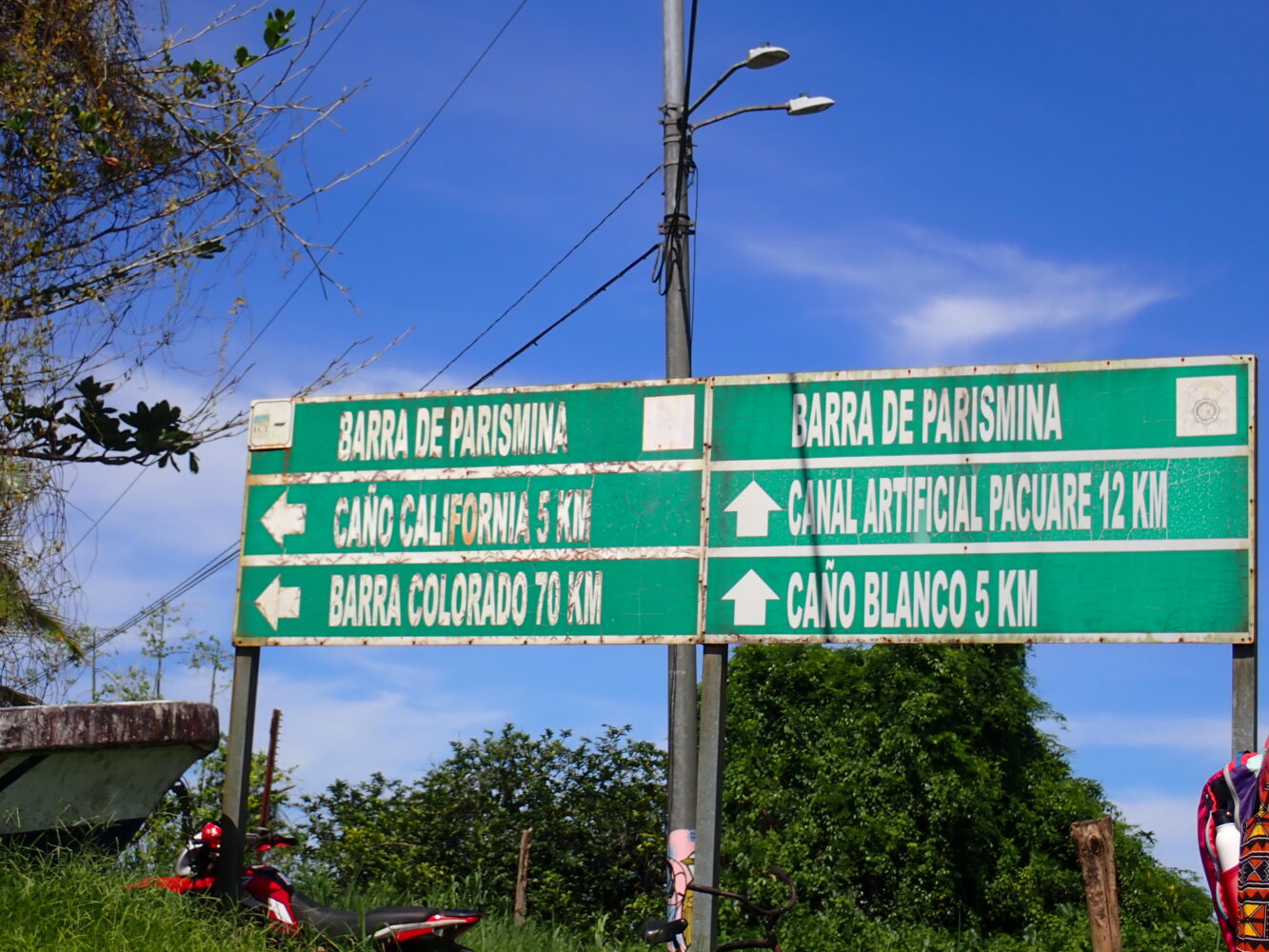
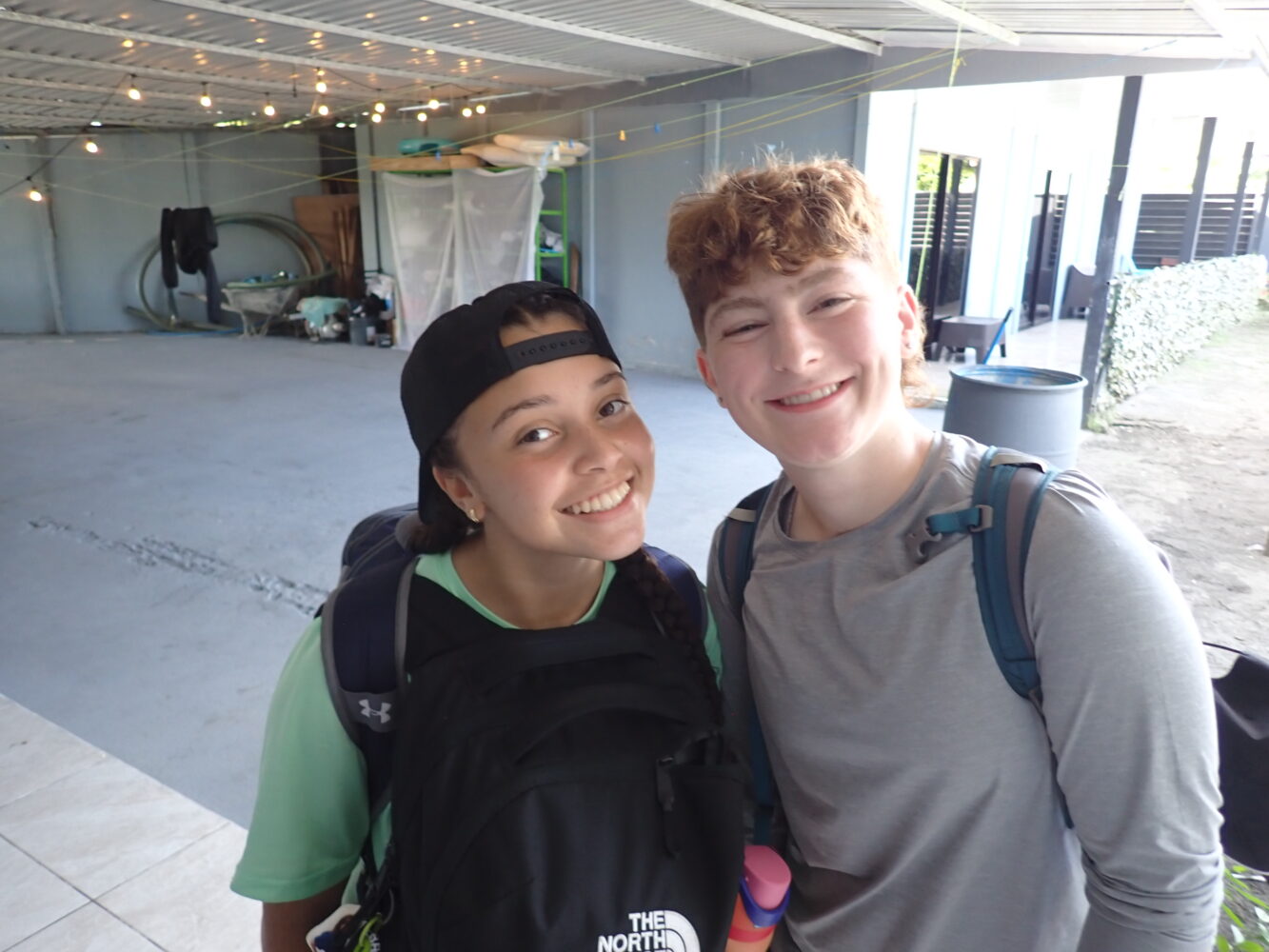
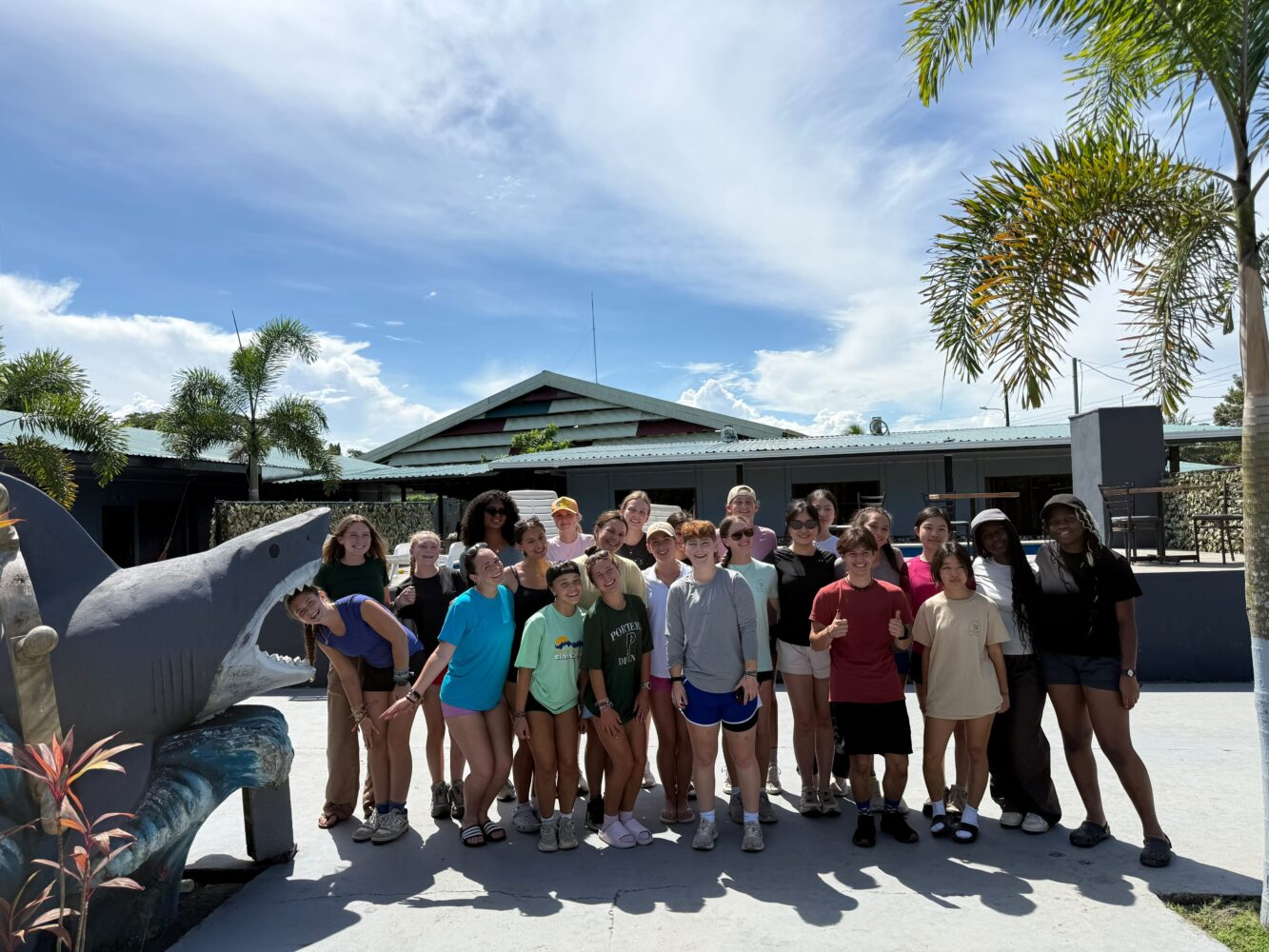
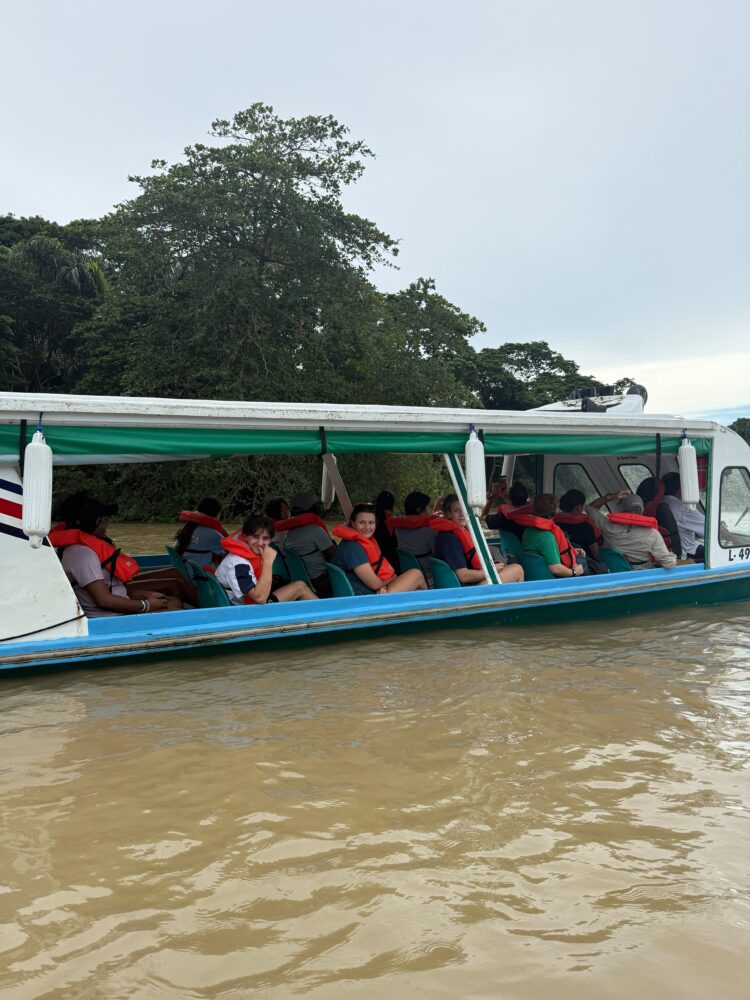
Today was a full and memorable day as we made our way from Chilamate to Barra del Parismina, a small community on Costa Rica’s Caribbean coast. Getting there was an adventure in itself, with a two-hour bus ride followed by a 30-minute boat journey through the waterways. When we finally arrived, we were greeted by the lush jungle, the sea, and the unique beauty of this tucked-away community.
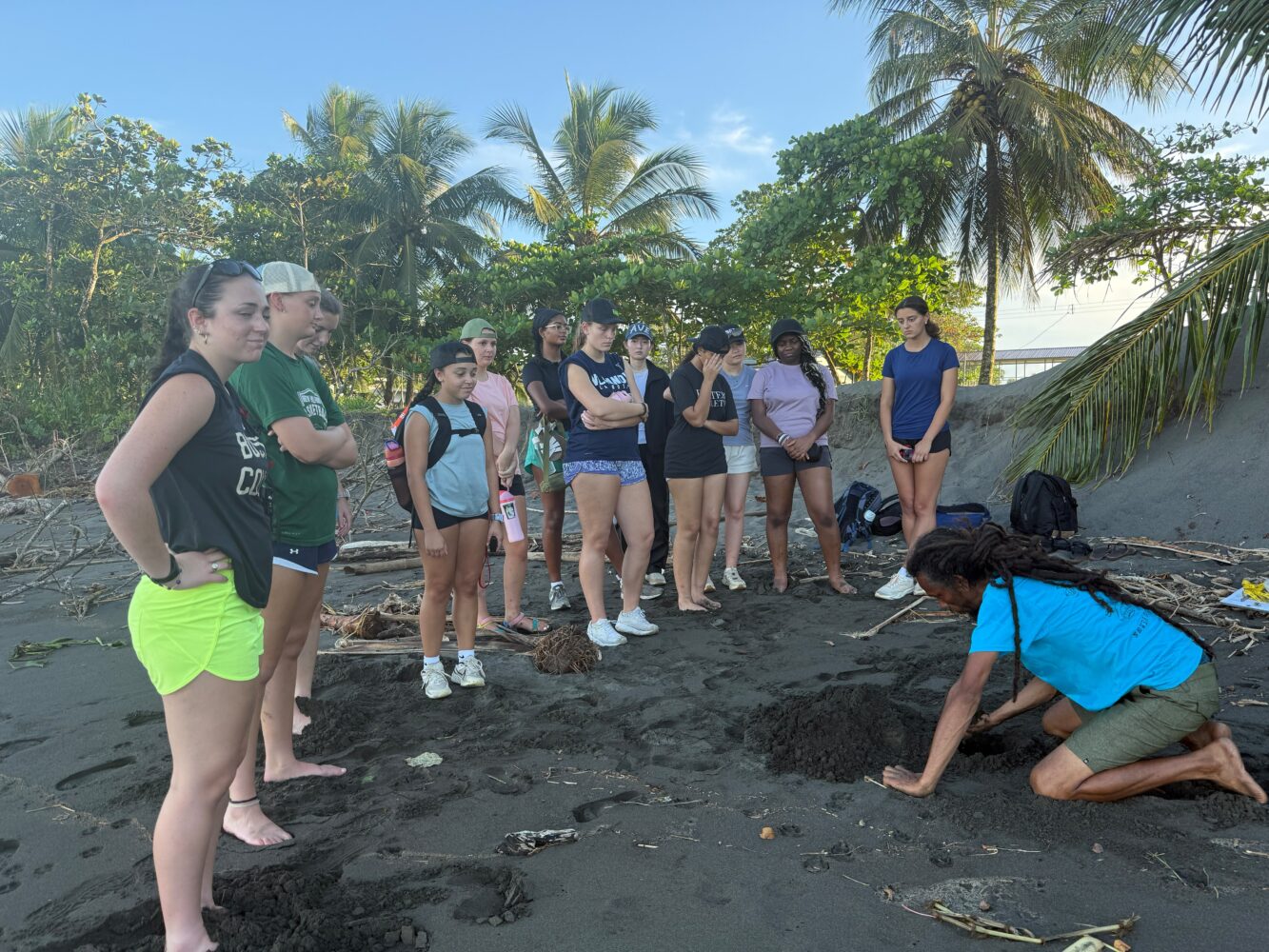
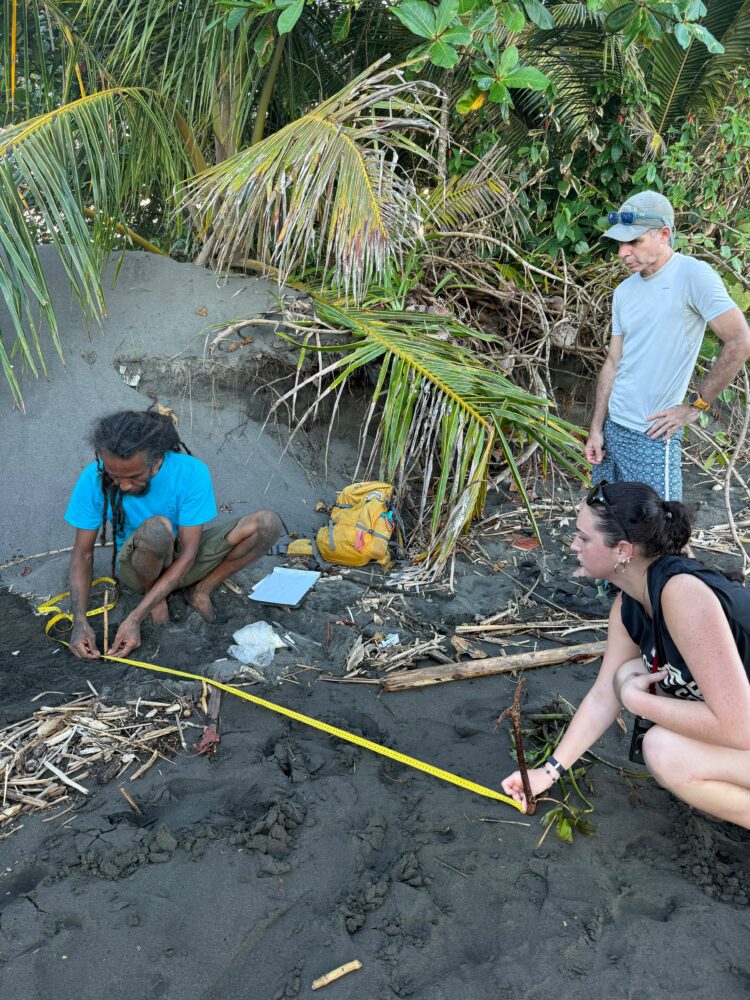
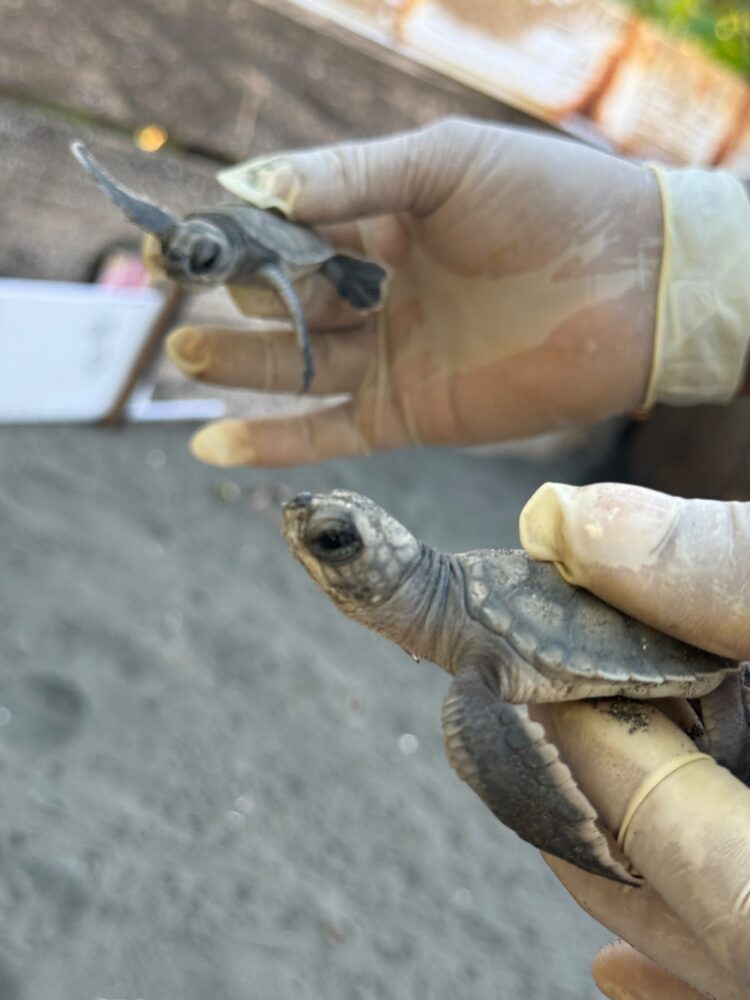
Our time in Parismina is giving us the opportunity to experience community life while learning more about the important work being done to protect Costa Rica’s sea turtles. Today, students had the unforgettable experience of helping release baby sea turtles, an experience that brought the importance of conservation to life in a very tangible way.
The day ended with a long night walk, after which our students were definitely ready for some well-earned sleep! It has been a long and exciting day, filled with new places, new experiences, and plenty to take in.
~The Costa Rica Team
October 6, 2026
Jaime’s Garden
Student Authors: Megan, Macy and Aspen
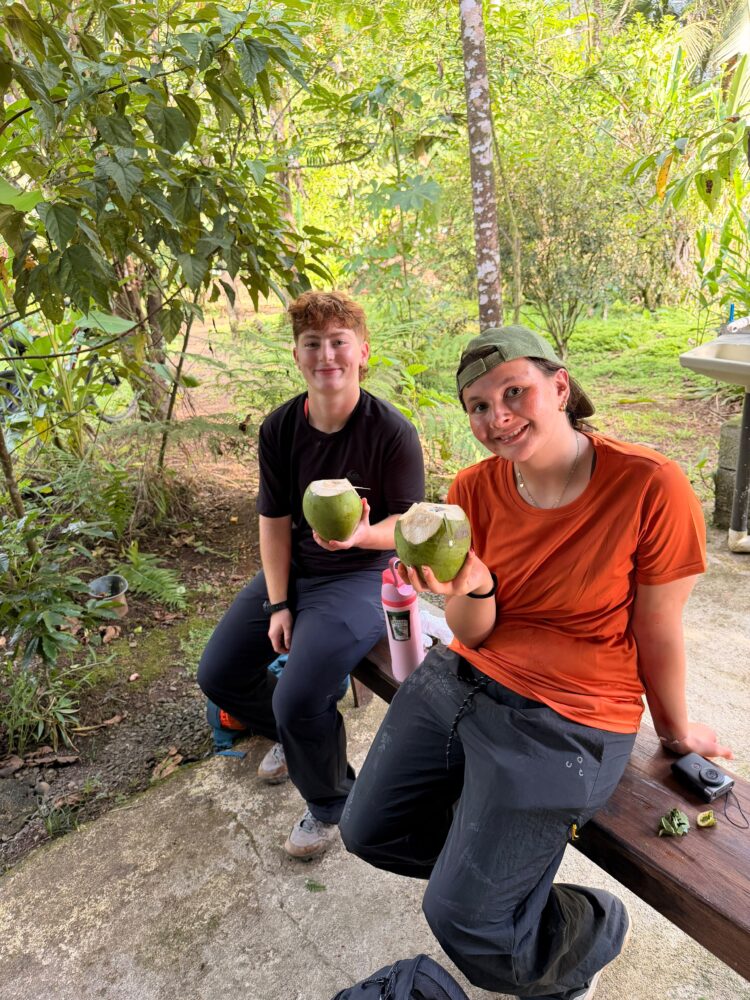
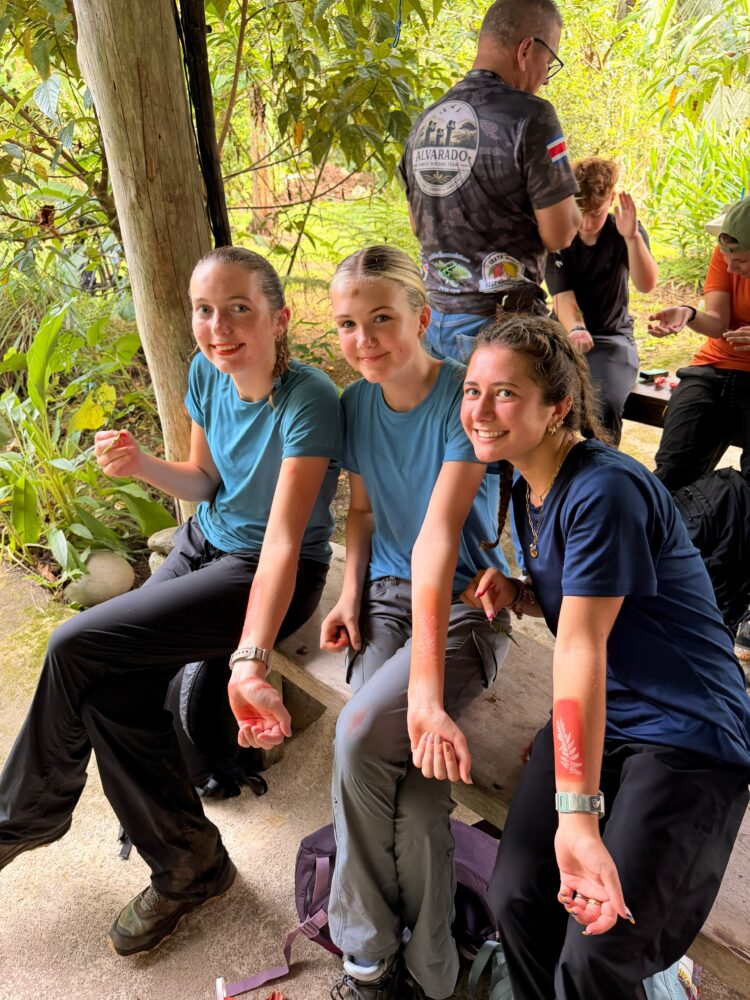
During our visit to Jaime’s garden, he taught us about all the different plants that he has and how he can use them medically to help people. This changed all of our perspectives and showed us how natural resources can be used to benefit our lives in better ways than typical over-the-counter medication. This goes on to show how some people’s first instinct would be to go to the store to get the easiest available medicine, not realizing that their home is surrounded by natural resources that can be used as medicine.
The perspectives that were available to us were Jaime’s, our classmates’, and our teachers’, but we were missing the other side of the medicine, which would be doctors who make the same medicine with many more ingredients than what Jaime is using and that might change the side effects and normal effects of what we were given today to eat. It was really interesting how today we were given a leaf that, when you folded it up, smelled it, put it on your forehead, and repeated it, would help to stop your headache. If we were to get the perspective of how to solve a headache from someone like a doctor, it would be like taking Advil, etc. This presents us with the simple ways that local people are able to use homegrown methods with a much deeper understanding and meaning than just a label and a barcode.
Another great experience that changed our perspectives based on identity was going to the homestay with the local families in town. Even though most of us had a hard time understanding and speaking Spanish, we were still able to communicate with them. At the beginning of the visit, we were uncomfortable and nervous to try to speak Spanish with the family. But by the end, we were able to connect through the shared experiences of family, culture, and land. Going to someone’s home in a new country taught us so much about the different values and ways of living. It showed us the way that everyone in this town is family, and they carry so much history throughout their generations and lifestyles, connecting everyone’s experiences in different ways. When hearing about everyone’s homestay, we were able to notice that everyone’s experience was much different than each other. This shows how someone else’s physical, cultural, and environmental identity can impact the experiences we all shared today.
October 5, 2026
Connection to the Land
Today our students had their first round of visits to research organizations. They visited the Nature Reserve at Lapa Verde and the La Selva Research Station. In the afternoon, they had a workshop about ethnobotany and visited an organic farm. Here are the reflections of the day.
Student Author: Elsa
While touring the organic farm today, Aaron, our tour guide, was explaining to us about pineapple plants. One plant can grow 3-4 pineapples until they are no longer good to eat. The first pineapple is the biggest and the most visually appealing. These pineapples are the ones shipped to the US. The second pineapple is smaller and less vibrant, and those are shipped to Europe. The last pineapples are kept in Costa Rica and are the smallest. The thing that stuck with me was that the taste had no impact whether it was first, second, or third choice. This made me think: why do Americans get the biggest pineapple even though the flavor is no different than a small pineapple? U.S. consumers have an ideal look that they think of when imagining fresh produce. The ideal version of a pineapple is large, a bright yellow body, bright green leaves, and a perfect oval shape. If the pineapple is slightly green or misshapen, it can affect whether the pineapple sells or not. Over 50% of the pineapples sold in the world come from Costa Rica; this makes me think about how pineapples are marketed to us and how we have such low tolerance for anything that isn’t perfectly yellow and perfectly shaped. This encourages me to be more flexible with what I buy, as now I know that often the look of a pineapple doesn’t affect the taste at all.
Student Author: Sarah
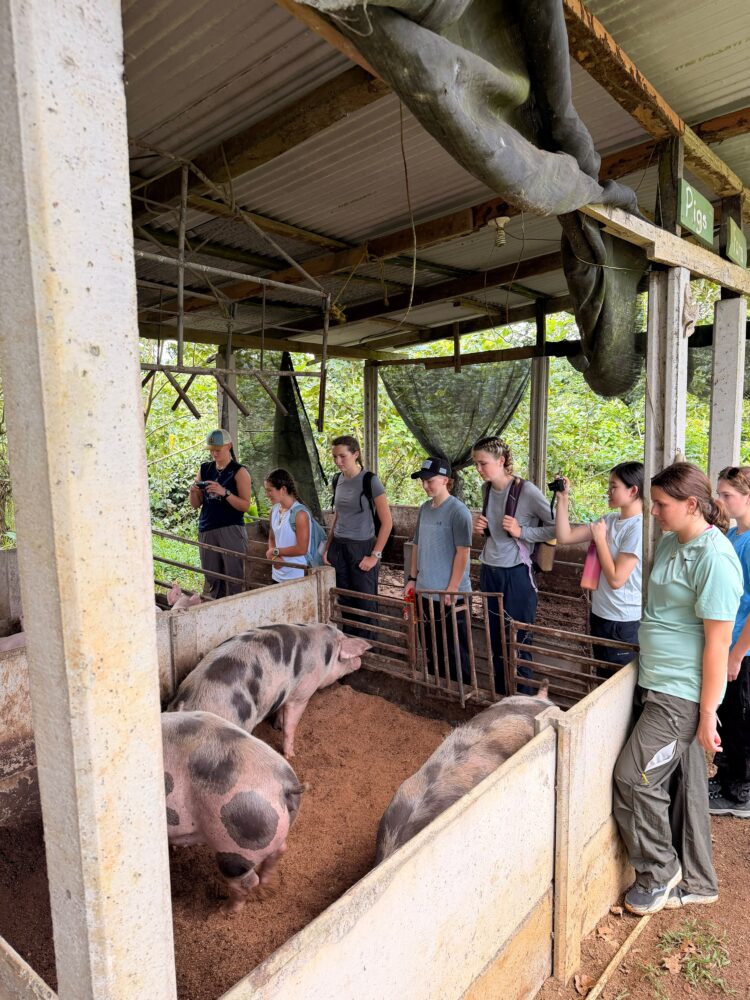
This afternoon our class split in two. Half went to lunch at community members’ homes, and the other half went to an eco-farm. After eating a delicious lunch of rice, beans, chicken, fried yucca, and plantains, we set out on a tour of the farm. Our tour guide, Aaron, told us about his family’s history with farming and how each one of us came from farmers, whether we knew it or not. We walked through the property, stopping briefly at a variety of crops and listening to Aaron’s stories. After a few stops, we stood before a tall bush bearing hundreds of small, circular green kernels. They were spicy and left a burning sensation on my tongue, but that was not the most significant thing I took away from the plant. While listening to Aaron’s recounting of the steps needed to process the kernels into pepper, I looked down below me, where I saw a long, stretching line of leaf-cutter ants carrying leaves ten times their size. The sheer quantity of them was shocking, but it was what Aaron told us next that stuck with me the longest. He told us that in recent years, they have seen more evidence of damage done by leaf-cutters on the crops than ever before. His family hypothesized that the ants were more active than usual because even they could sense an approaching ecological emergency, and they had been stocking up on materials to prepare. This moment passed by quickly, but I continued thinking of this message as we finished our hike.
Coming from suburban New England, my connection with land is very different from the agricultural society of Costa Rica. I have always heard of communities that predict storms and climate disasters based on the changing behavior of animals, but to see firsthand how creatures as small as ants are impacted by global shifts in climate was eye-opening. It is so easy to say that climate change is a hoax and to overlook the impacts on animals until you see how even the smallest parts of the ecosystem are affected by changes. As I continue in my time in Costa Rica and back home in Connecticut, I hope to be able to strengthen my connection with the land and make it impossible to overlook changes happening around me.
Student Author: Avery
After having lunch with the homestay families, half of the group went to an ethnobotanist named Jaime, where we explored the physical impact of plants and their healing powers in comparison to typical medicine. We were introduced to various types of plants and fruits, their origin, and how they affect the human body. Together as a class, we were able to taste the different plants given to us and observe how they made us feel. Some made our mouths go numb, others cleared our sinuses, and Jaime overall explained how those plants are the simplest way to healing. I thought this experiment was truly eye-opening because in the lives of most people, we turn to medicine for every small inconvenience we experience. We rely so heavily on lab-made products that we take for granted what Mother Earth has offered us already. This concept further connects to the question we were studying today – what have we learned about conservation in the local communities? At home, we find plants, fruits, and other resources everywhere we turn, but do we do much with them? We may use them for small tasks, but we aren’t taking enough time to research their importance and use them to their full potential. Here in Costa Rica, Jaime and other researchers find a use in every organism they encounter. Whether it be using it for medicine or simply diving deeper into its background, every resource is isolated and used to its potential. I believe that this is a form of conservation that is not explored enough and is something that we need to incorporate more into our everyday lives at home.
Something that stuck with me earlier this trip was a phrase that Randall, our World Leadership School partner, said to us: “Everything you need is right in front of you. If you don’t see it in front of you, you don’t truly need it”. Why would we waste valuable resources when they are easily accessible for us to use? This exploration of conservation truly stuck with me today, and it now motivates me to become more appreciative of the resources I am given by Mother Nature, for we have what we need.
October 4, 2026
Conservation and Community
Hello all. On their first full day in Costa Rica, our students reflected on the following question: What have you learned from the community about conservation today?
Student Author: Audrey
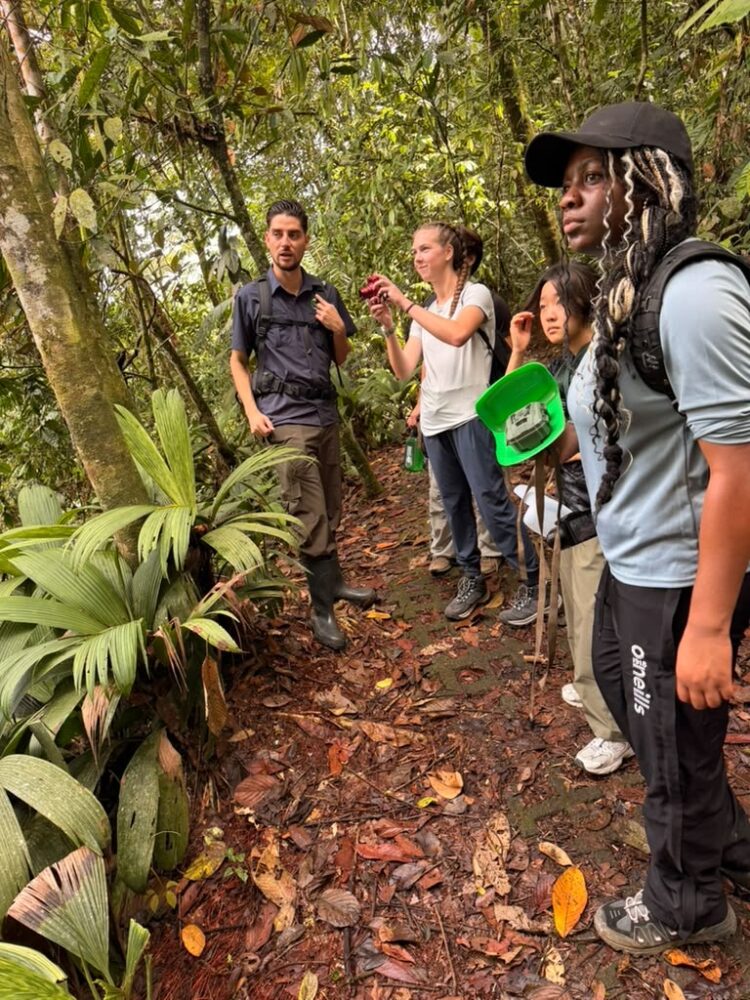
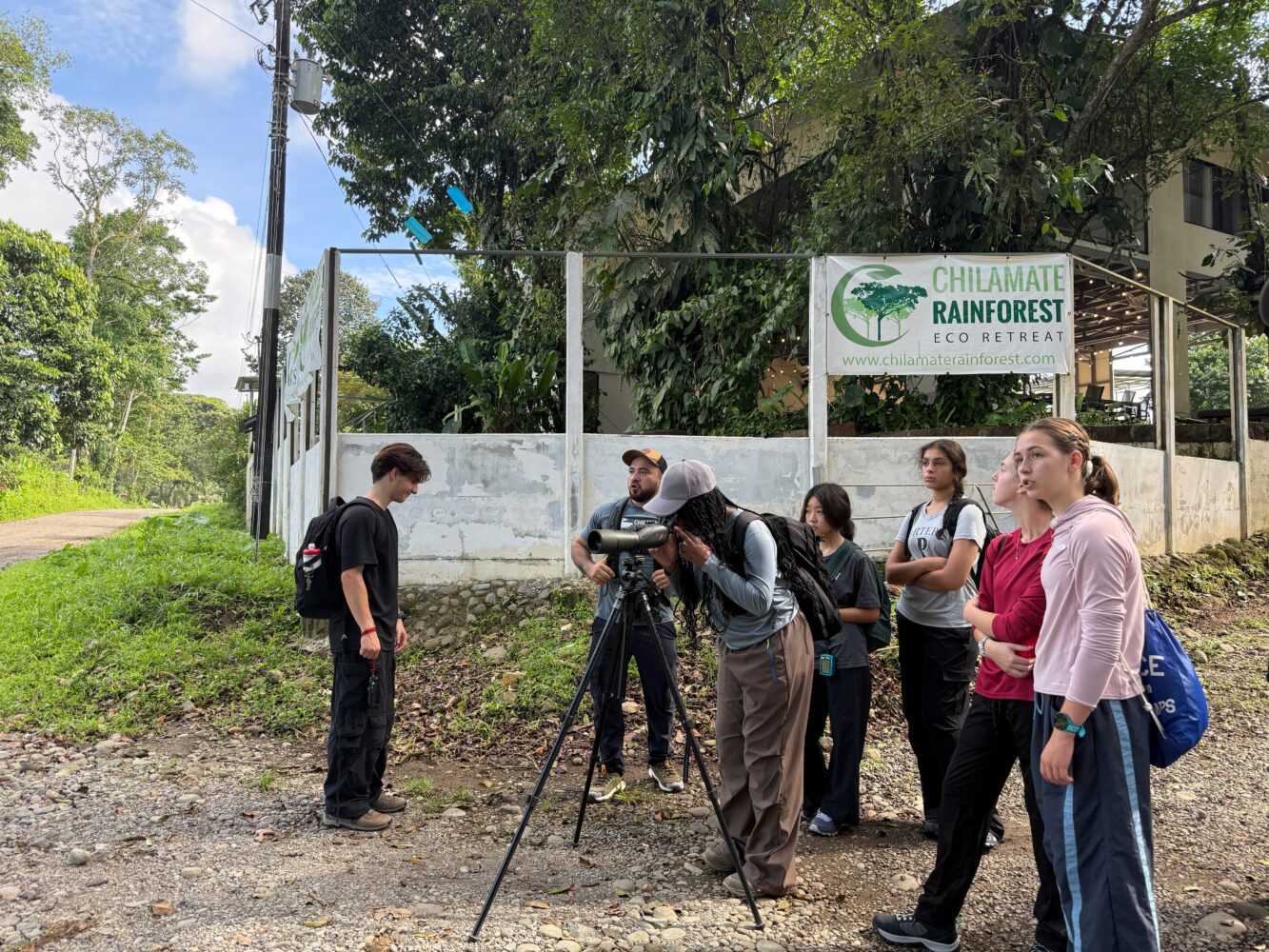
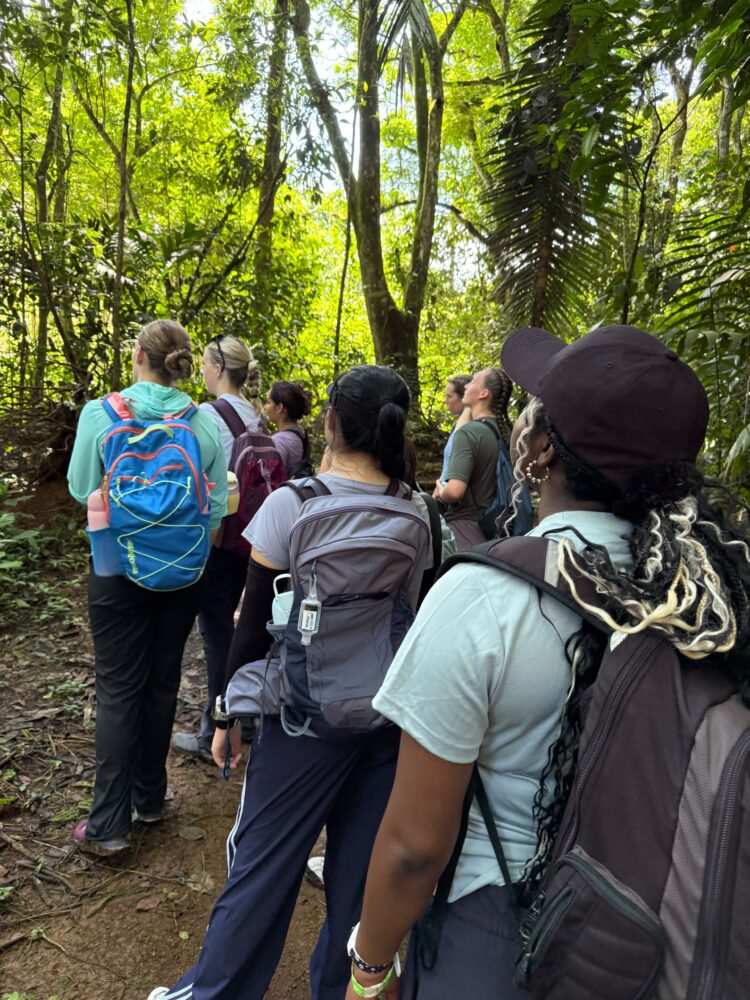
October 4 was our first full day in Costa Rica. Early in the morning, we split into groups and did a rainforest walk to spot and engage with the wildlife. Our tour guide had a telescope that allowed us to see animals and insects from very far distances.
During the tour, we got to interact and ask questions of our guide, who helped us get through muddy areas and identify species that we thought were cool. Through the telescope, we saw various animals including spider monkeys, lizards, frogs, and many more.
During the tour, all of my group members and I quickly took notice of how easily all the guides were able to identify lots of different species that were camouflaged within the forest. After this observation, we asked the guide how long he had been working here. His reply was, “17 years.” After learning that, I recognized that most of the people in Costa Rica who have jobs involving teaching people about the community and life here have done this work for years and are passionate about their home.
After just spending one day here, I’ve discovered that the way people live in Costa Rica is very different from what you’d normally see in Farmington, Connecticut. Everyone is so passionate about the climate and environment here, being very eco-friendly and involved with the community. After speaking to some of my peers, I learnt that a lot of people don’t interact with their neighbors or community, for example, by volunteering or just having conversations with the people you live near.
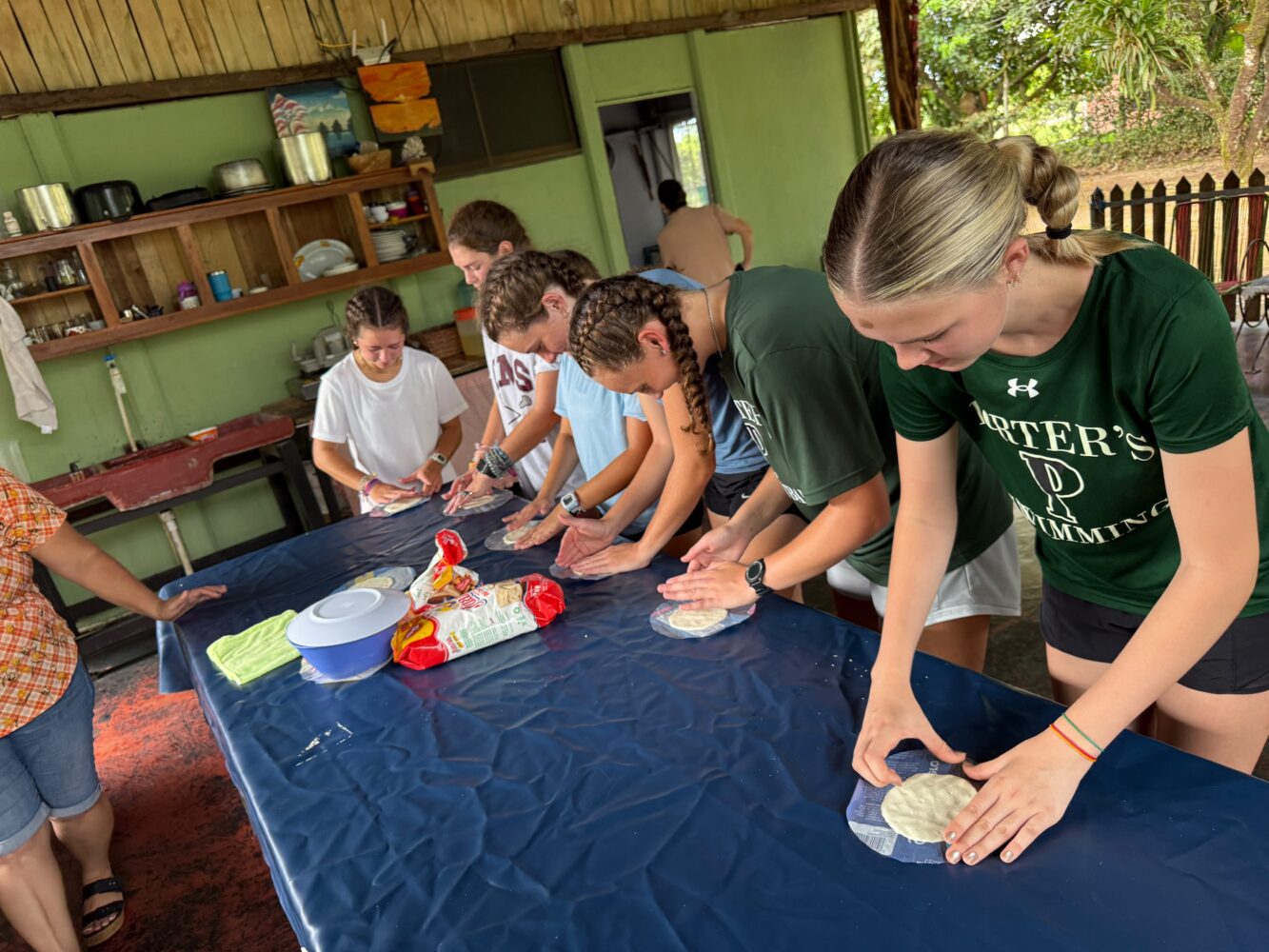
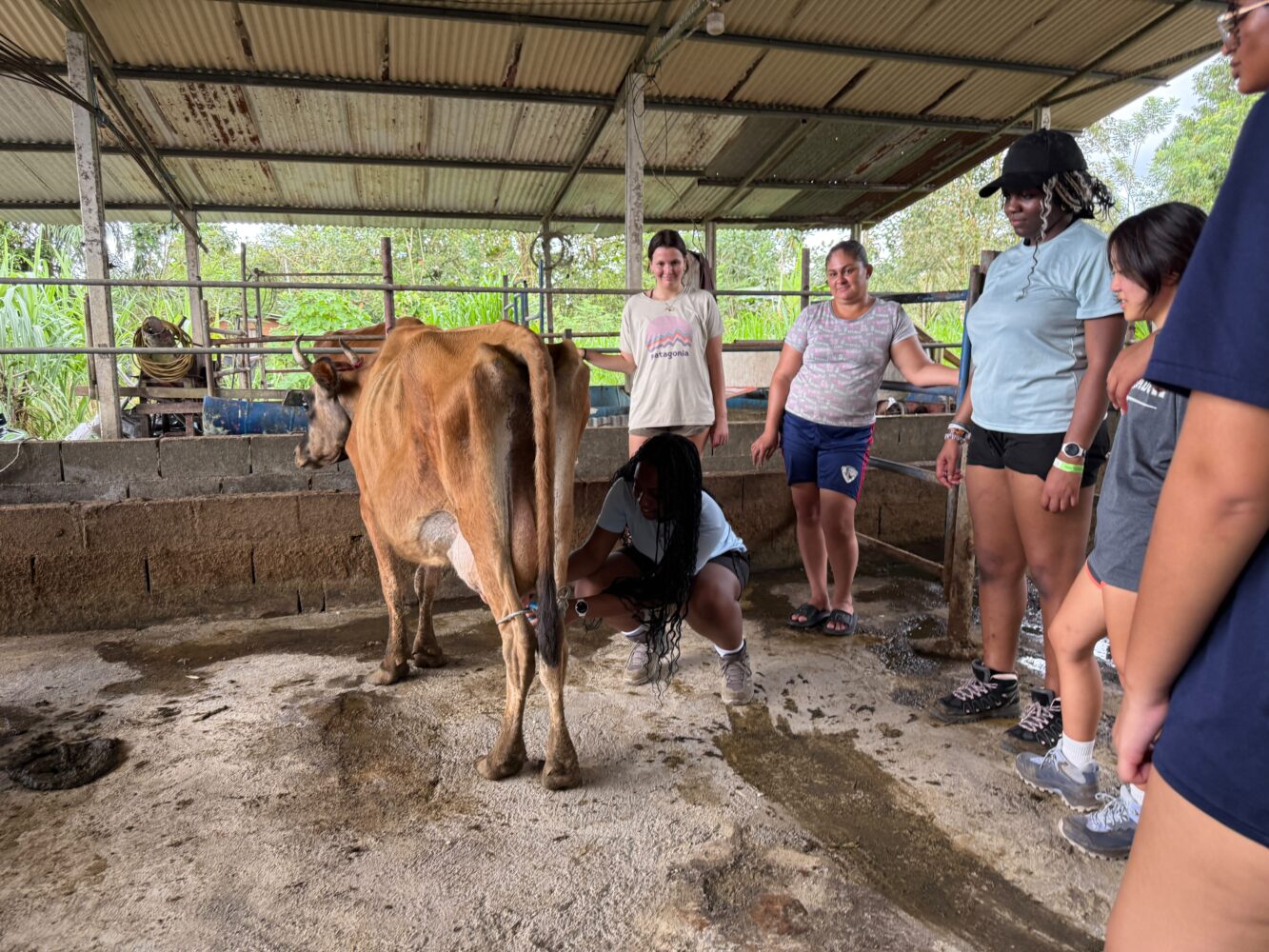
In Chilamate, all the locals were so welcoming and knew so many people, and were very passionate about their culture and what makes their household special. When walking around the neighborhood in Chilamate to interact with the community members, they made life look so simple. Before this trip, I had never milked a cow or consistently picked fruits and vegetables to make food on a weekly basis. I learnt that the way things go in this community is very different from what a lot of the people I know and I are used to, and that if you take the time to try and learn and gain experience involving the outdoors and your environment, you get to see truly how special the land is around you and what you can make of it.
STUDENT AUTHOR: CLEO
In the short time that we have stayed in Costa Rica so far, I have already learned more about conservation than I ever could in Ford library. Our hotel, Chilamate, is an outdoor resort in which every square foot is either a room, path, or part of the jungle. Thinking back to suburban Connecticut, I wonder why everywhere isn’t like this. There is so much empty space where trees, bushes, or natural grasses could be growing. The locals and the natural environment here coexist, whereas at home we design neighborhoods and natural areas separately. We take down more trees and resources than needed, whereas here they take only what is needed.
Along the same line of thinking, one of the leaders of WLS mentioned how the individuals of the jungle don’t compete, but instead mutually grow and share resources for the good of the ecosystem. While I haven’t spent enough time in Costa Rica to fully understand how their lifestyles reflect this, I know enough about the American Dream to know it is the exact opposite. American values are based on using the system to uplift yourself, rather than the entire community. There is no reciprocity, such as in the rainforest. Similarly, one of the greatest feats of American capitalism is the culture of consumerism, which is entirely visible in our own group’s experience here so far. Many of us brought and walk around with anything we could possibly use to make us comfortable–loads of bug spray, sunscreen, or 100% polyester clothing for the humidity.
The same leader of WLS also told us that the extent of your needs is defined by what is in front of you. His example was that if your room doesn’t have hot water, you don’t need hot water. While I don’t think this idea holds up under much scrutiny, it does in our immediate context. In Chilamate, there are no clocks or TVs in the rooms, no walls around many of the common areas, and of course no phones. Somehow, these things which may seem like needs in the United States don’t seem necessary anymore. Today I’ve felt more fulfilled than I’ve ever had in my life, and I have only a backpack full of things to my name. The idea is that conservation happens with connection through locals and the environment, and acceptance of what you have in front of you rather than taking more resources than are needed.
Student Author: Lena
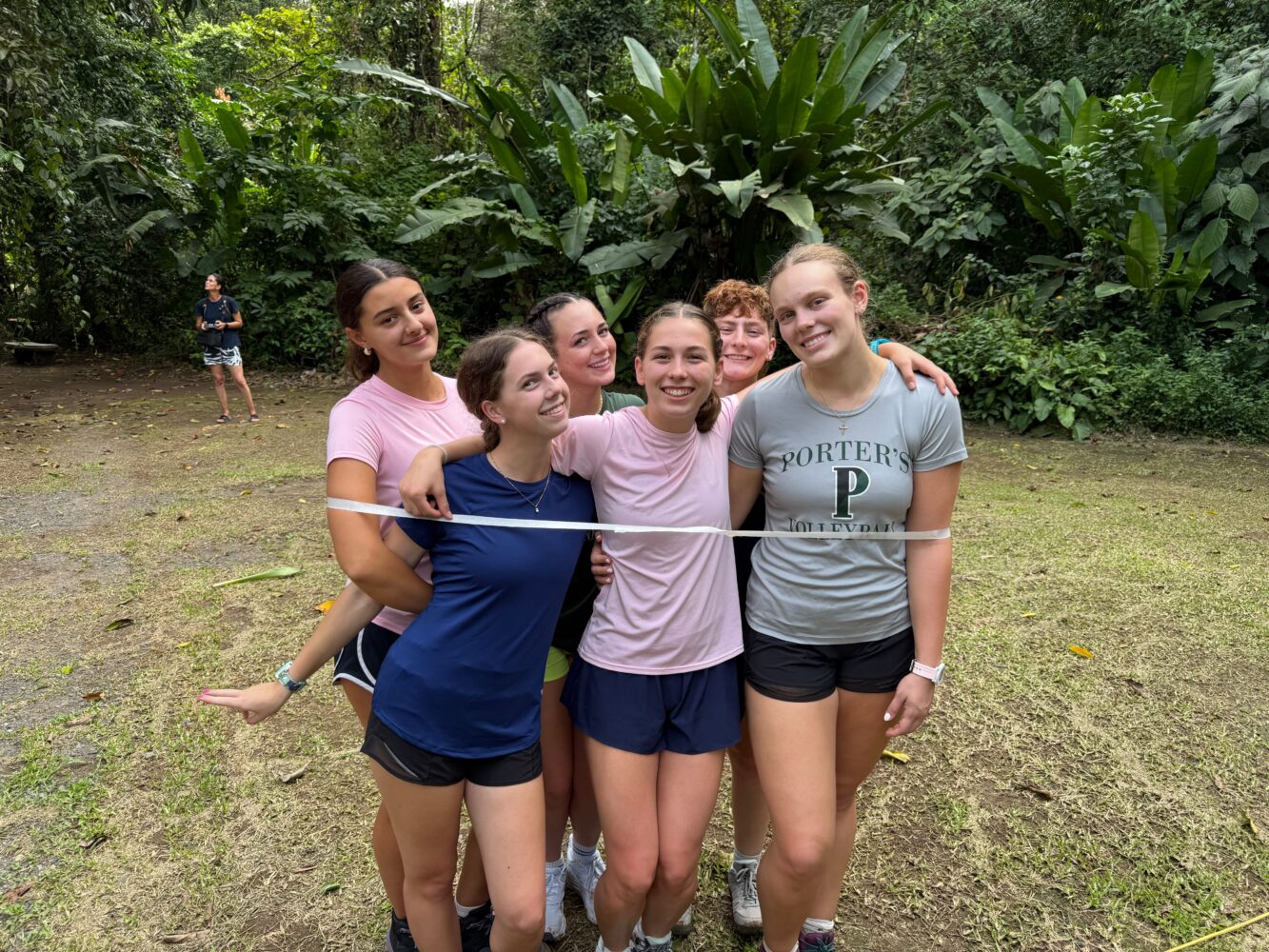
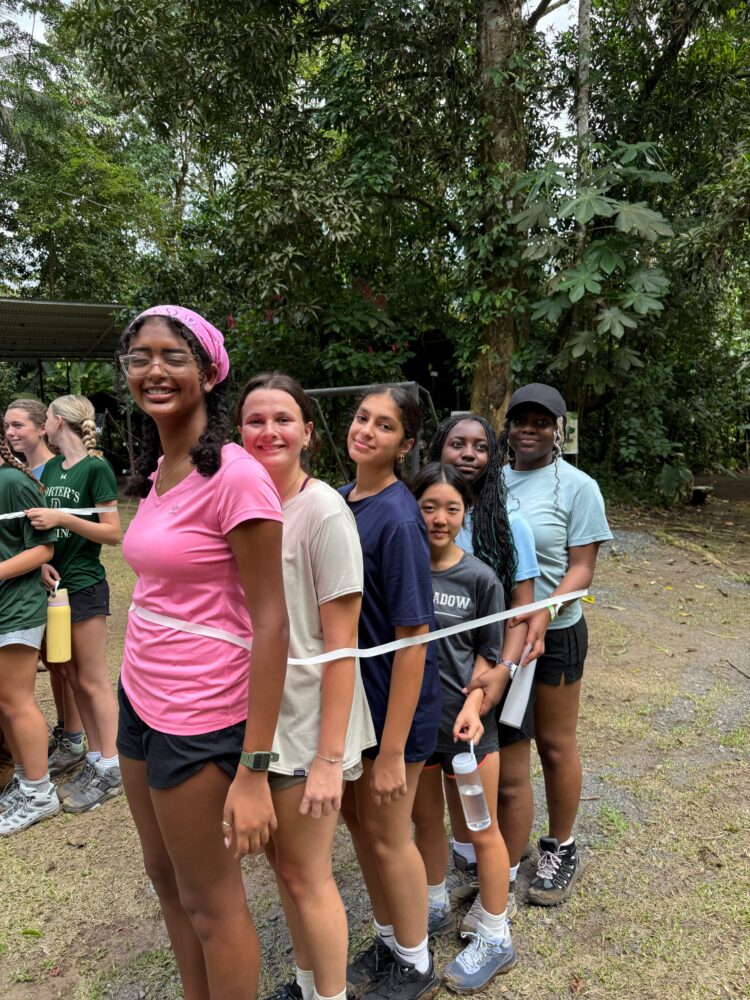
Today, our activity after lunch was called the “Adventure Race,” where we split up into teams of 6 and completed 5 unique challenges, each involving the local community. One thing we were told coming into the race was that some families may not speak English, meaning your group would have to speak to them fully in Spanish. At first, I was very intimidated by this because I knew that, in order to succeed in the race, we had to understand the instructions given. However, what really changed my perspective on the full household visits happened at the third station, where we were greeted by two elementary school children. Although they also spoke no English at all, we bonded over our shared love of pop culture. When we first walked up to them they both did the classic Cristiano Ronaldo celebration, and as we were leaving, we all did a “seis siete”. This showed me that even though there can be challenges when communicating across languages, there are still ways to communicate with each other even if it isn’t necessary through words. Going forward, I hope to use this newfound knowledge to better communicate with other locals I encounter throughout my time in Costa Rica in order to best connect with the culture.
Follow us on social