Learning
Inside “Voices of Leadership”
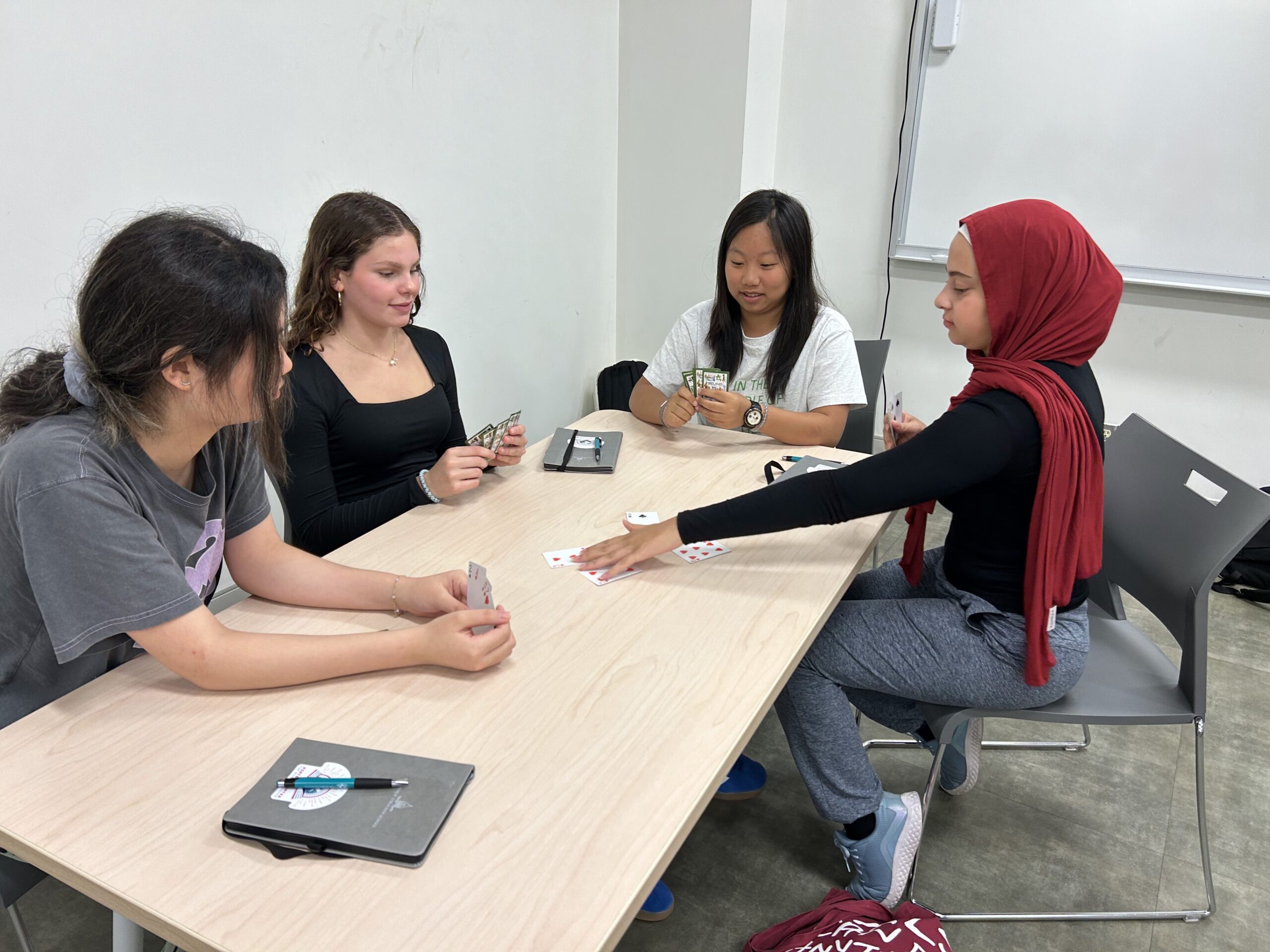
The most common phrase repeated during the Porter’s Center for Global Leadership (PCGL) Voices of Leadership program at Bishop Strachan School in Toronto was “I didn’t realize a leader…” As the participants moved through the activities on identity, networking, and models of changemaking, they realized that their vision of leadership was not making enough room for them to authentically show up in the present, as young high school students. Instead, like many young women, they imagined that a leader has every skill perfected, can take on every role in an organization or movement, makes the largest impact on everyone in a community, and does it all without any fear.
The week was designed to highlight the idea at the root of all PCGL programs: that girls and women of all ages can lead lives of impact, integrity, and courage.
There is no timetable or perfect manifestation of that idea because we’re each following our unique passions in a world that needs different types of leaders to solve complex problems.
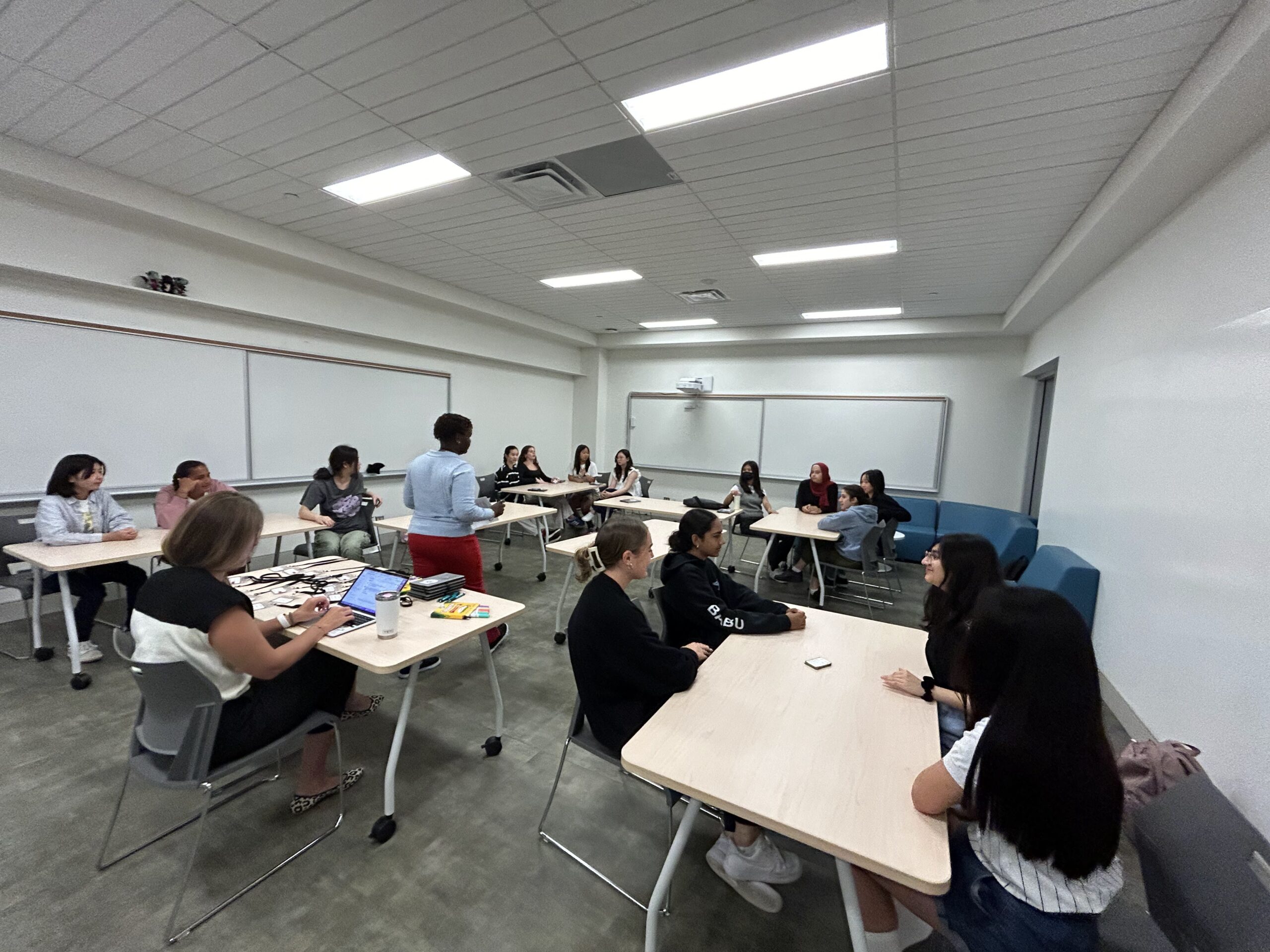
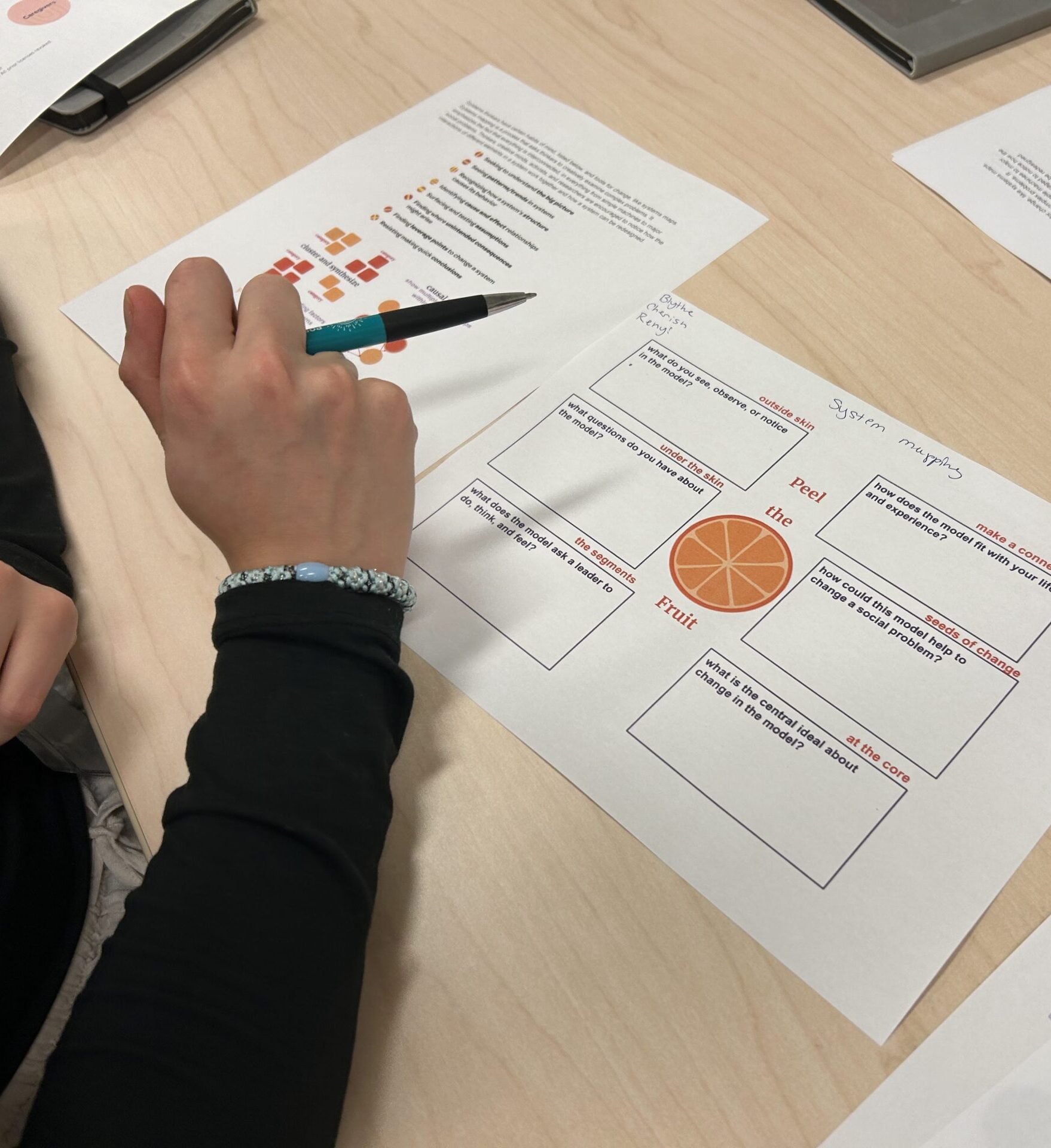
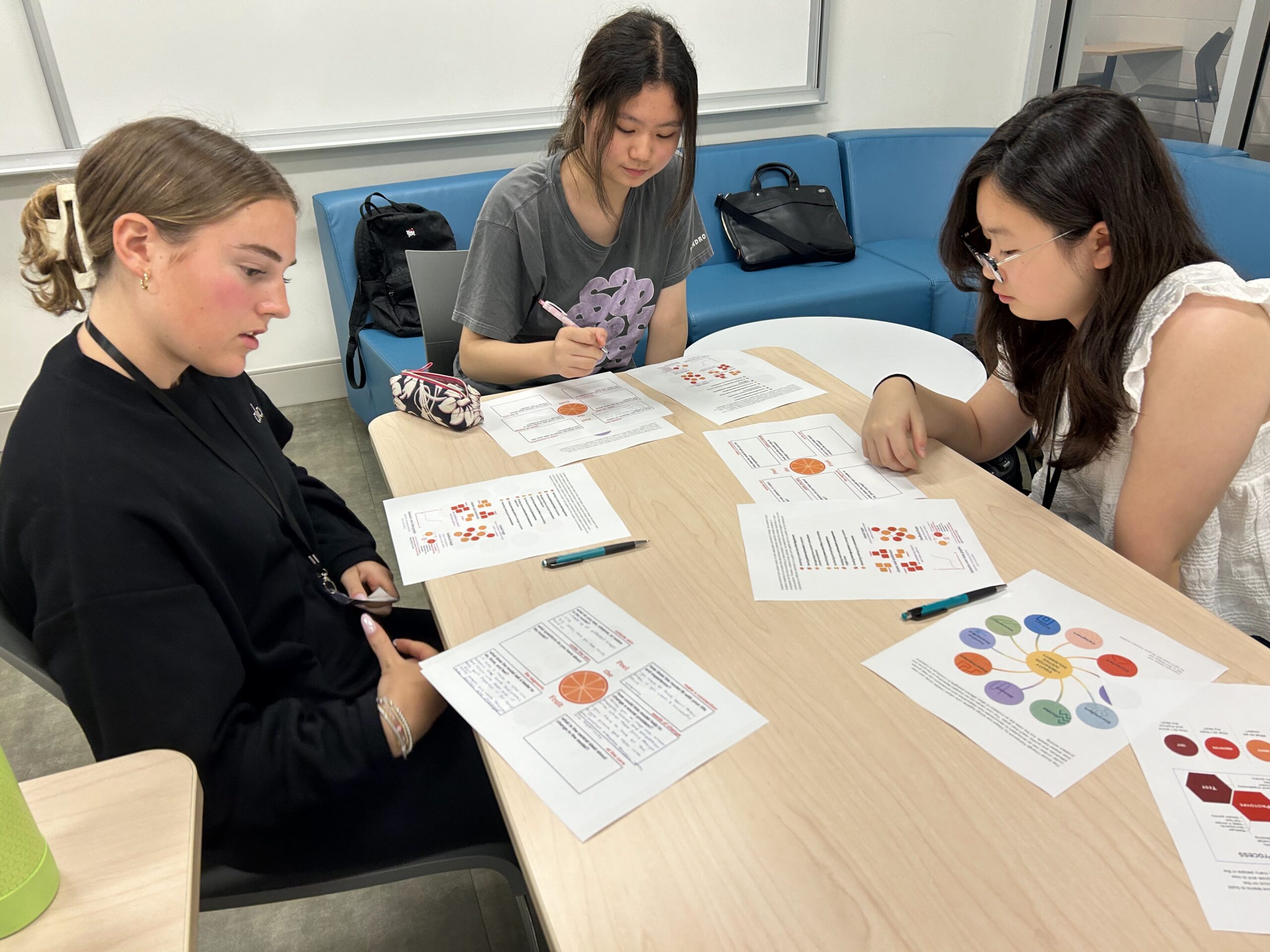
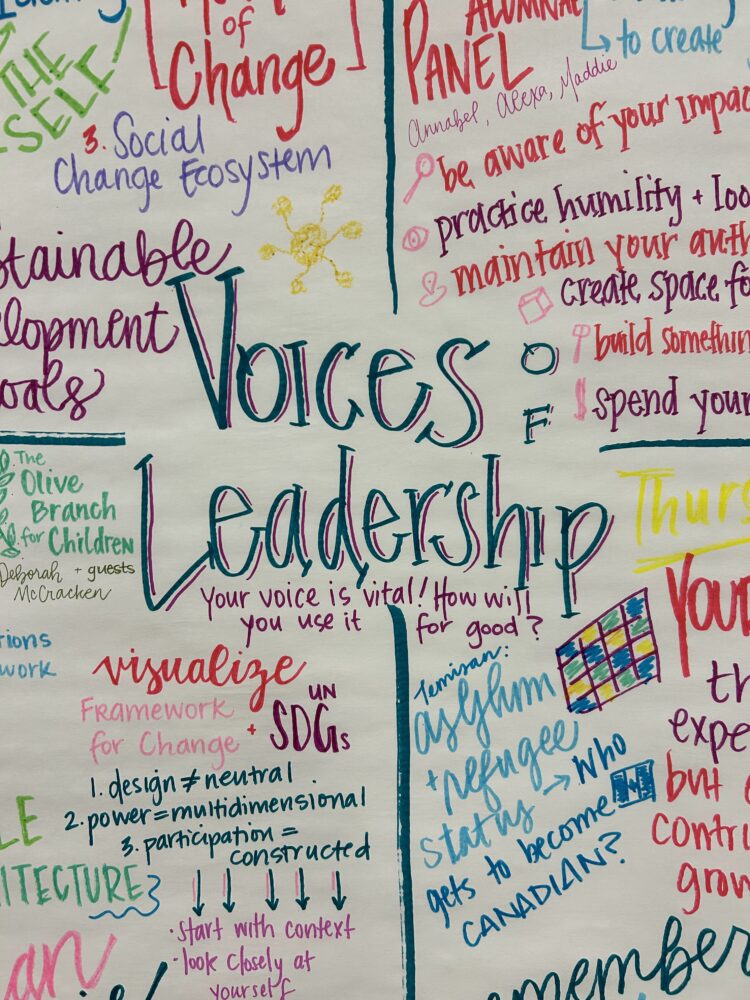
In one of the opening sessions, participants looked at a few different models of social change. Deepa Iyer’s Social Change Ecosystem map created space for the realization that leadership often means bringing together the people that are most well-suited for the task at hand. In the map, she explores how roles like the weaver, visionary, healer, and disrupter can be joined in common purpose, guided by their shared values.
During the discussion, participants responded to the question, “What does the model ask of a leader?” They recognized that there is no one way to be a leader, that multiple skills can contribute to solutions for big problems, and that when leaders prioritize inclusivity, they make room for many perspectives in the process of change. That discussion before lunch on the first day helped everyone to exhale! We were not there to ask them to be one way, to fit a particular mold, or to change everything about themselves in order to be seen by others as worthy of the responsibilities of leadership.
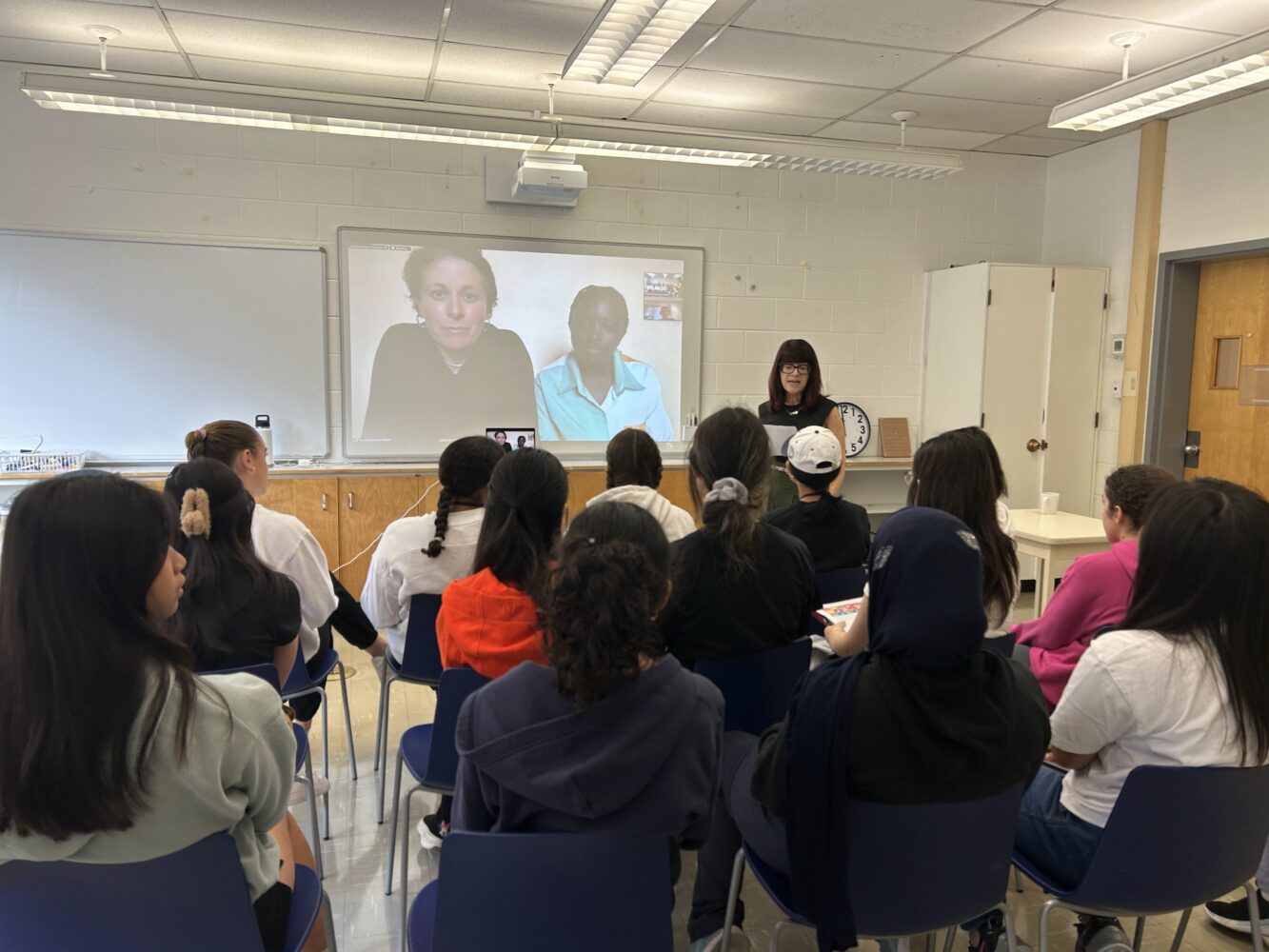
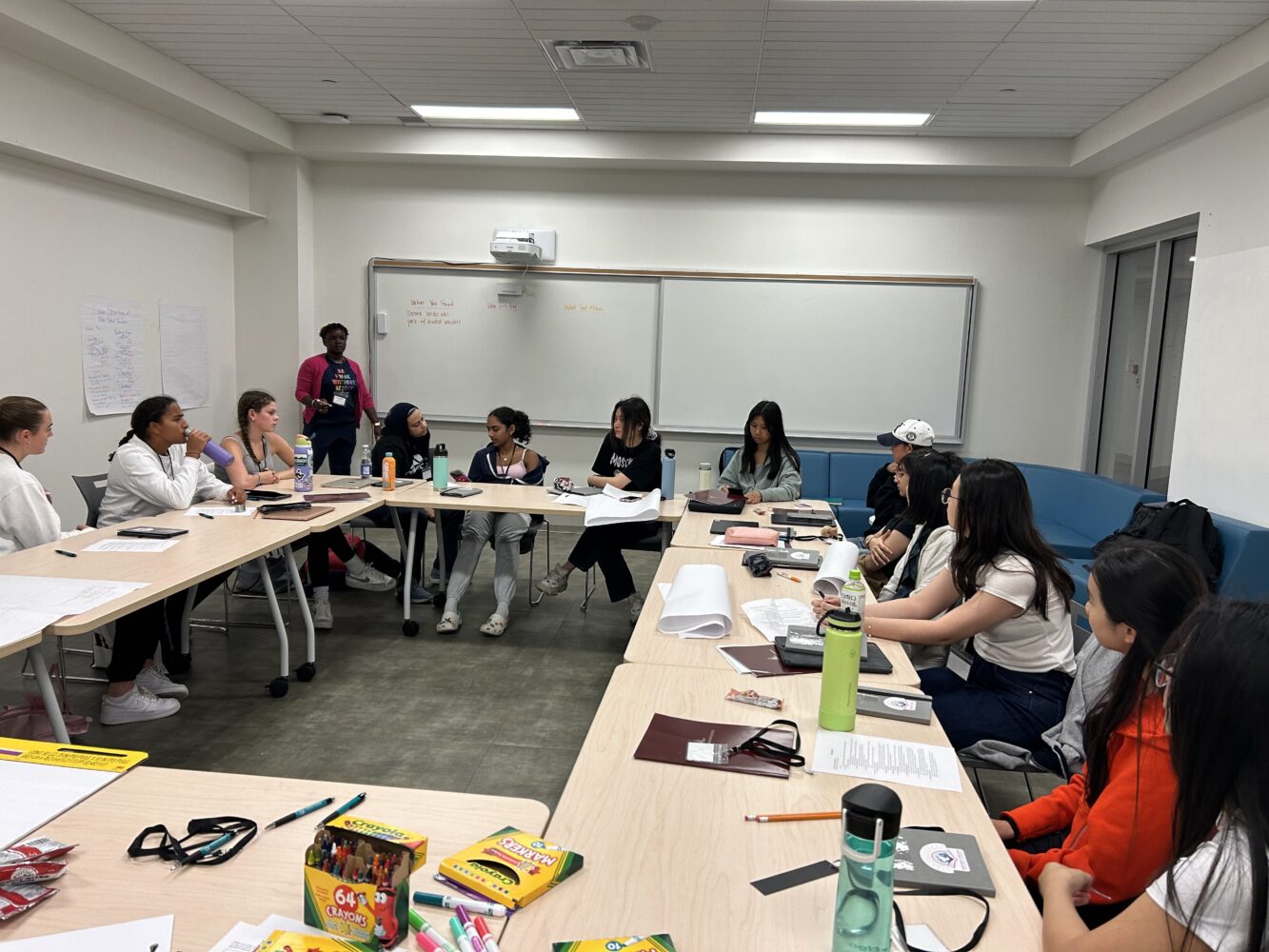
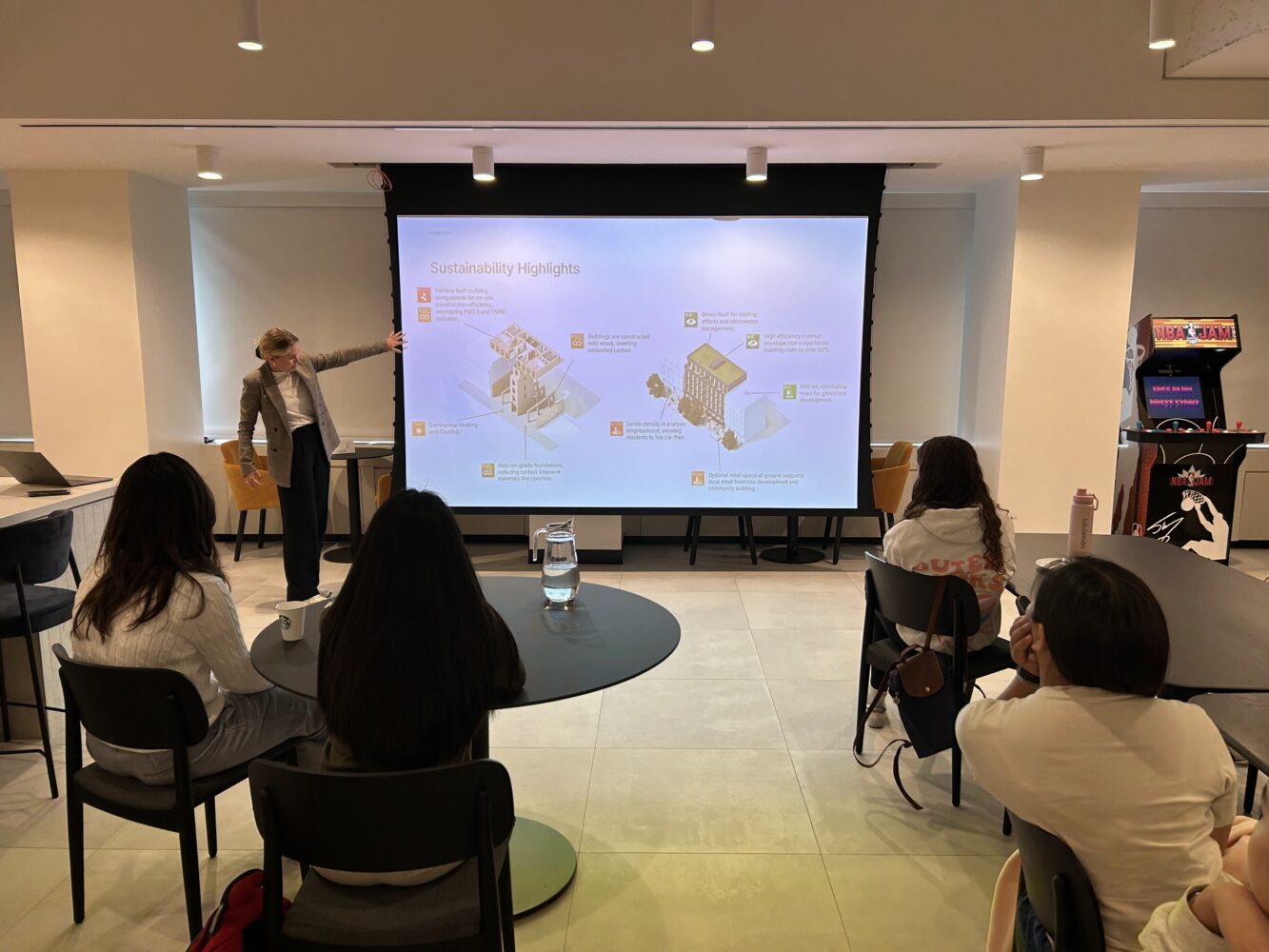
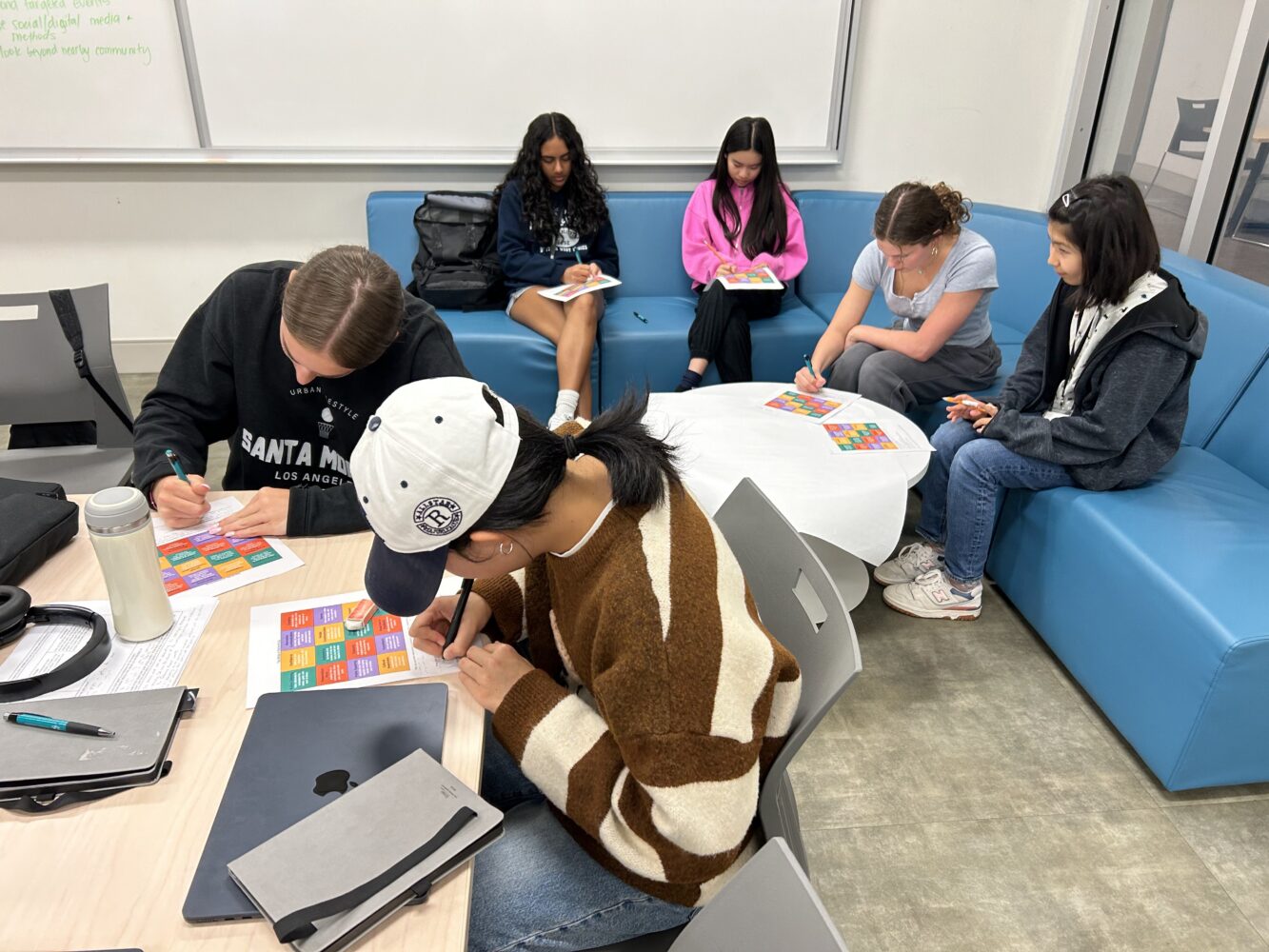
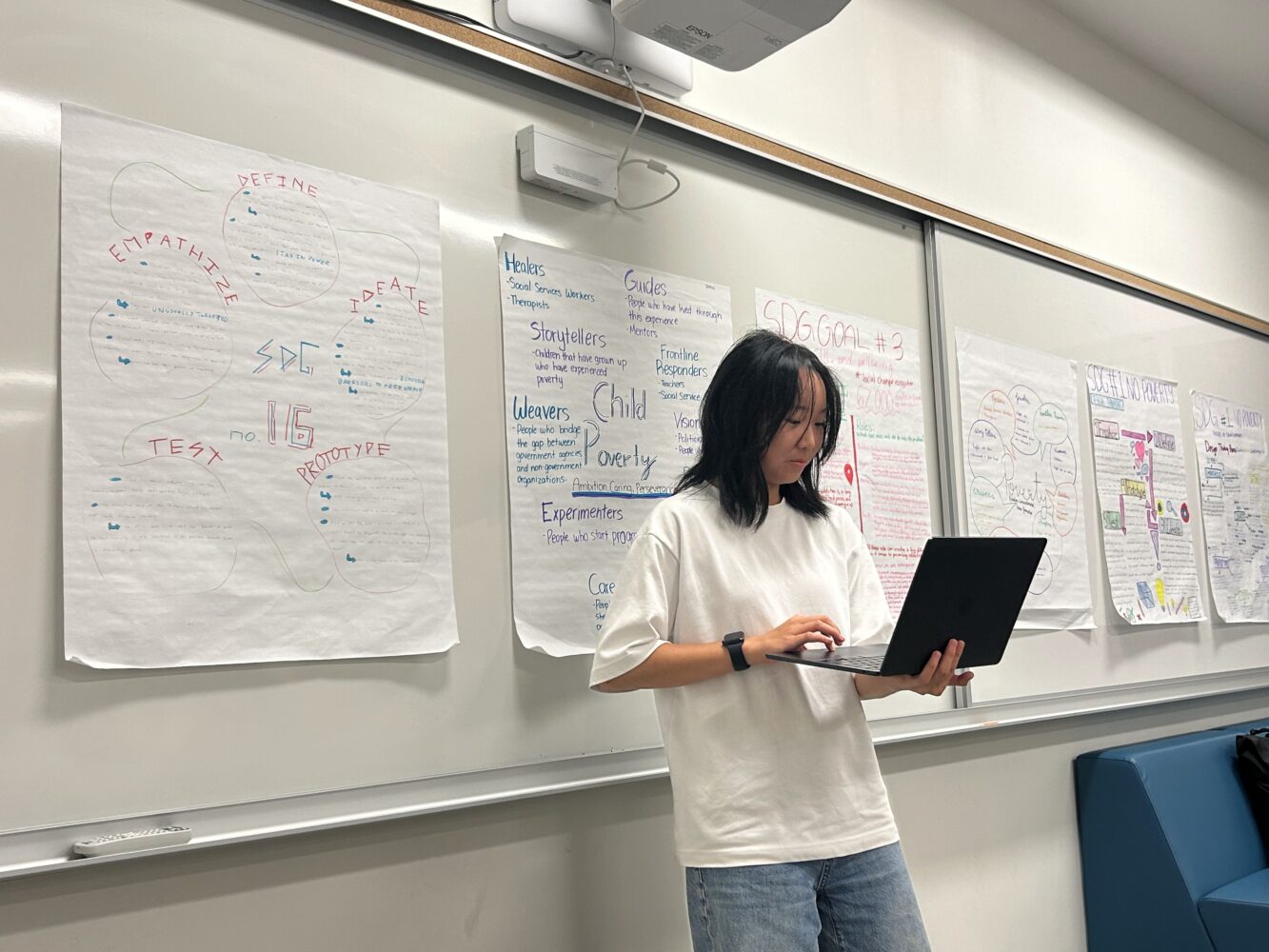
We also looked carefully at the different skills and values that contribute to success in leadership, using them to contextualize what the guest speakers shared about their journeys and map out how the participants would like to set their own trajectories.
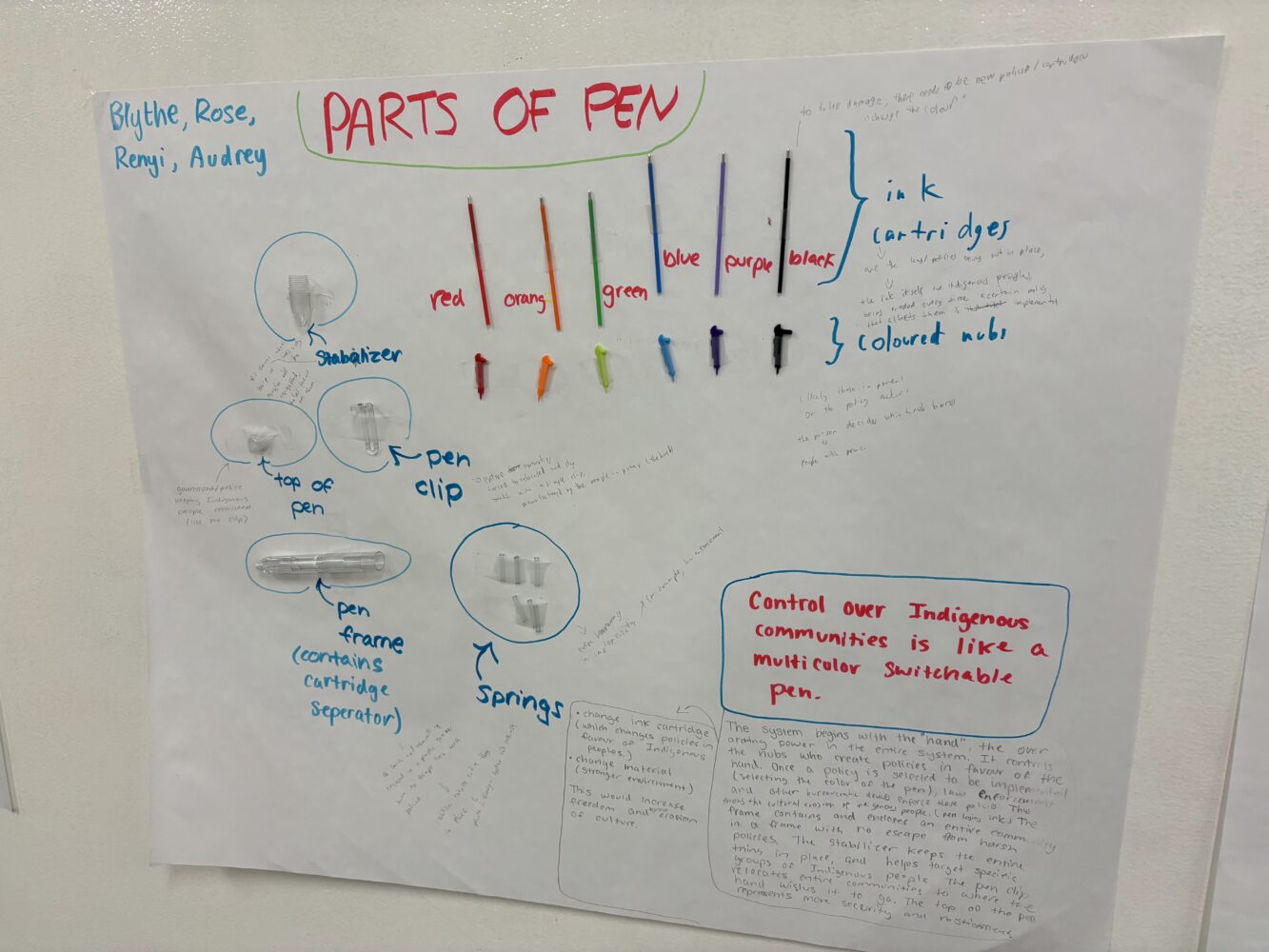
First-person narratives from women at various stages of their professional careers combined with tools to explore how identity intersects with social systems built a lot of self-awareness and -confidence. They heard about humility, an understanding of context, sustainability, and the importance of making a commitment with longevity. Using the JusticexDesign principles, — which foreground a “critical sensitivity to design” and “critical maker empowerment,” — participants practiced observation, synthesis, and systems-level thinking through a Take Apart centering the experiences of Indigenous peoples in Ontario, and a neighborhood walk identifying hostile architecture, as described by Canadian researcher Cara Chellew. They gathered tangible evidence of the impact of the choices of leadership, while also identifying points of intervention and change.
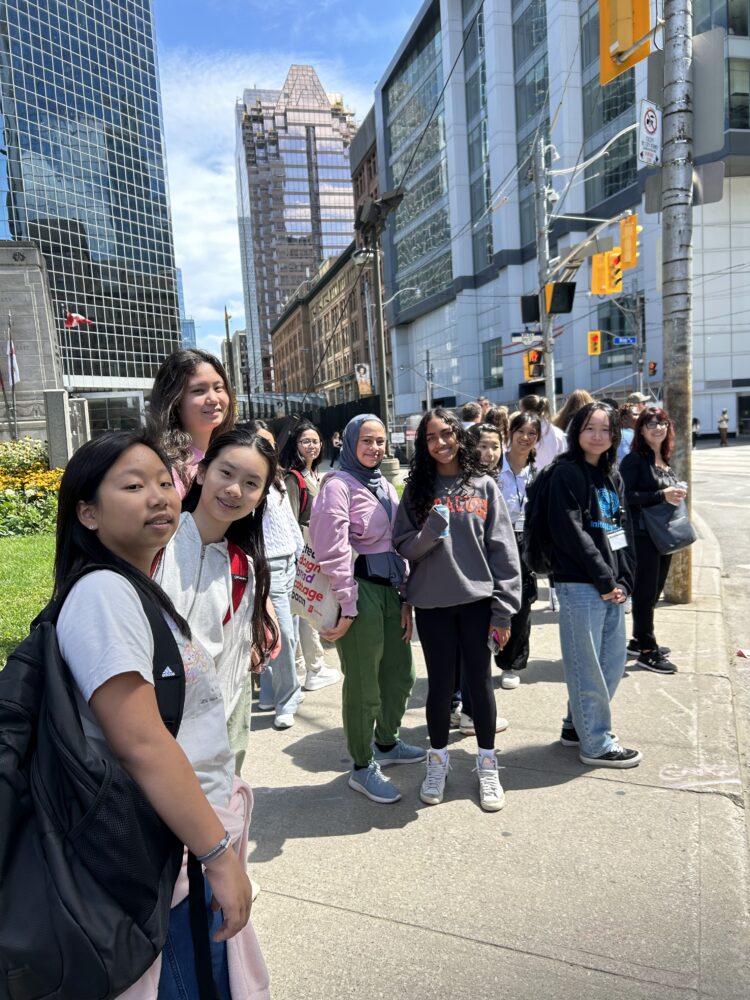
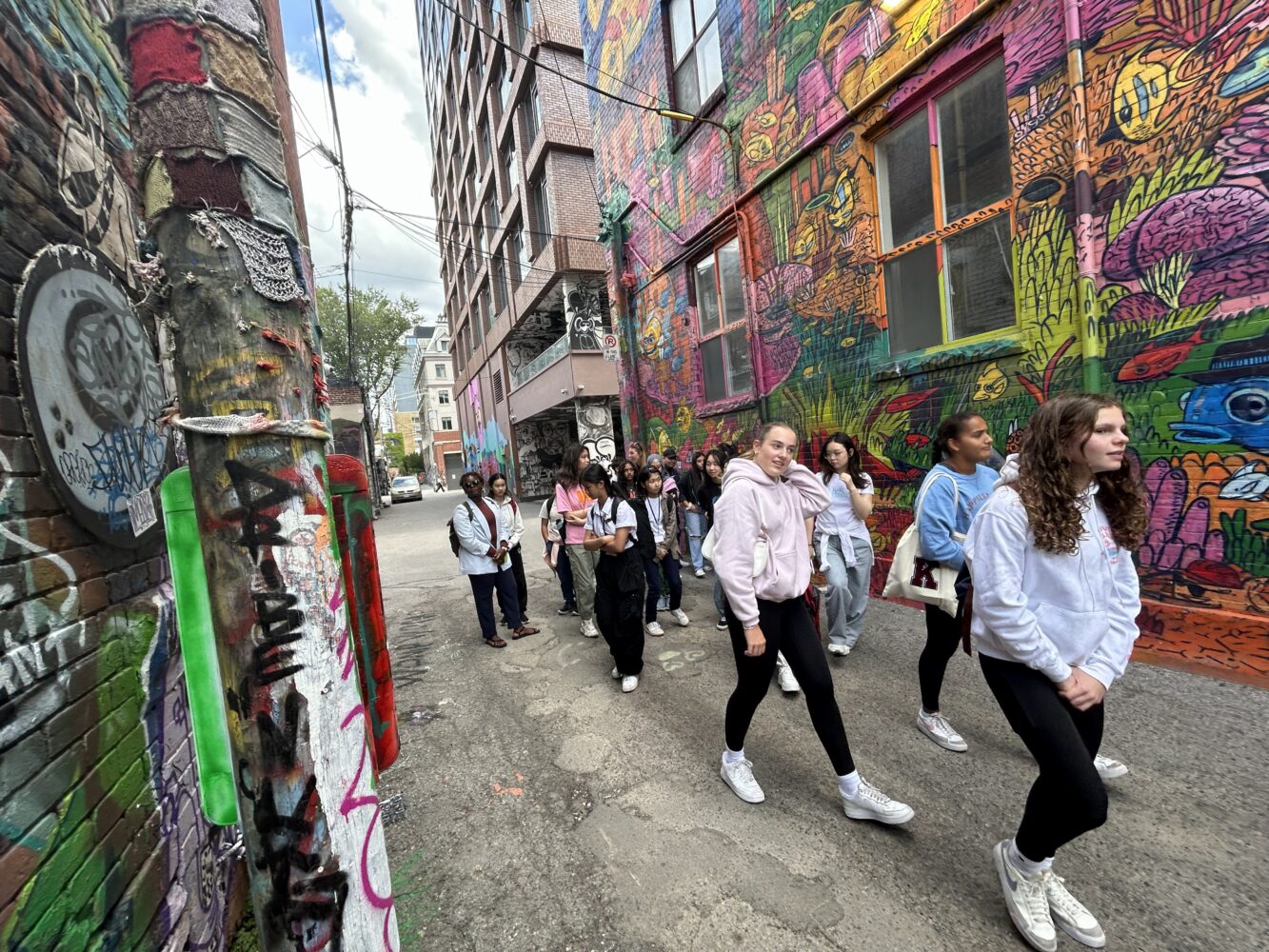
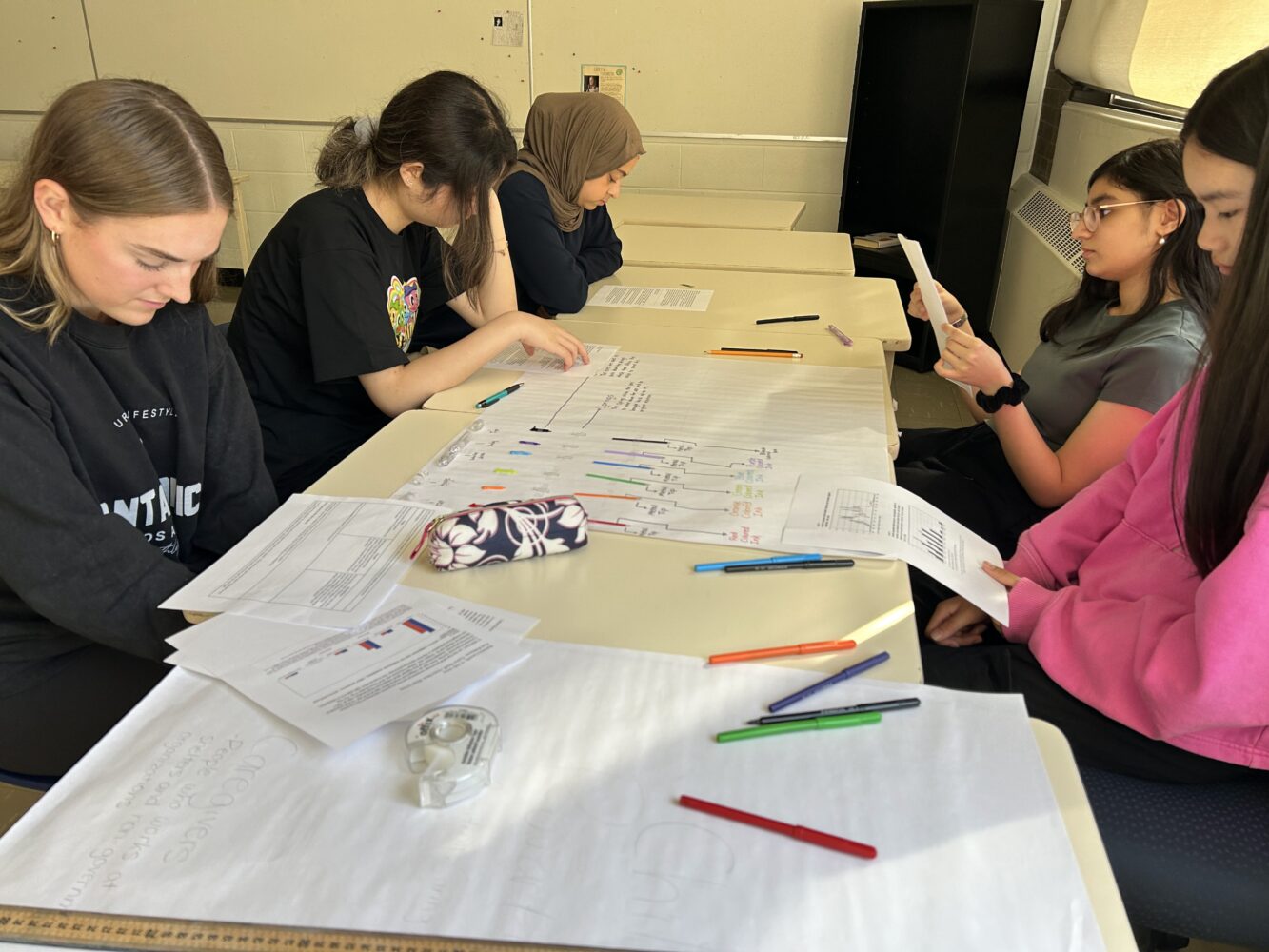
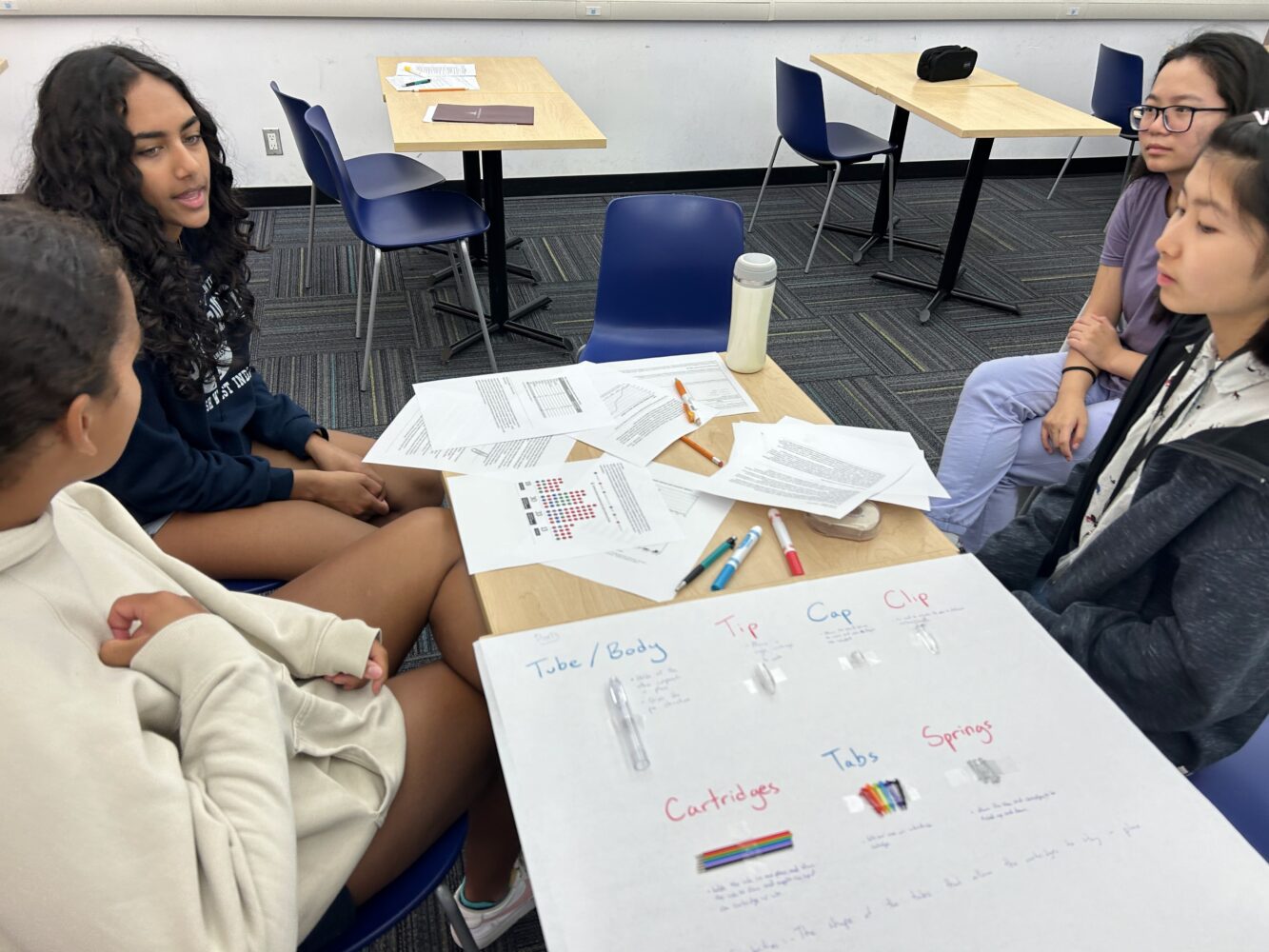
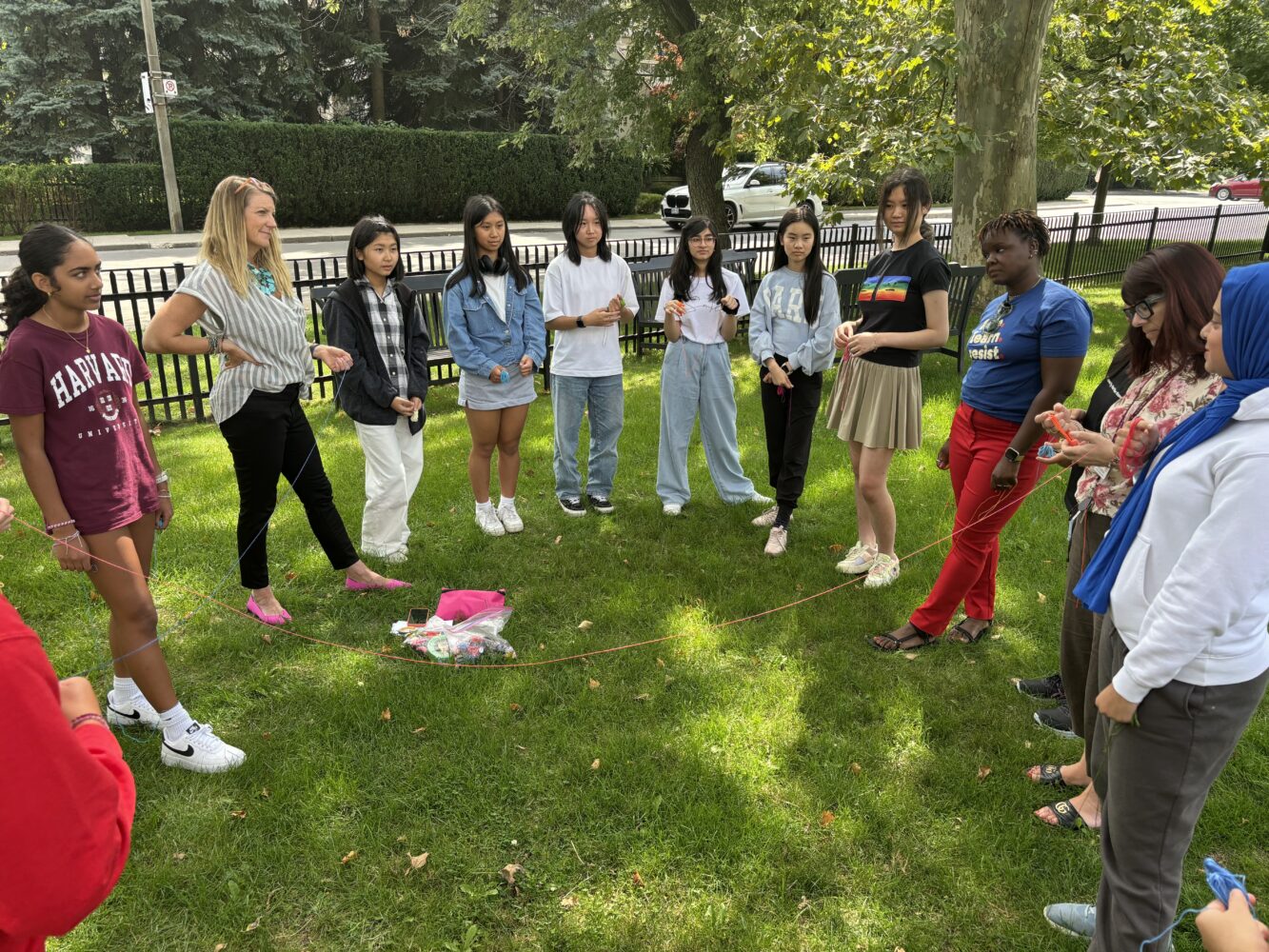
There were many more realizations about how to be a leader, now. By the end of the week, as participants shared their own voices of leadership, they spoke about making change this school year, learning to be open to meaningful feedback, valuing underappreciated strengths, and seeing themselves as leaders, with and without specific titles in school and community groups.
The program, as designed and facilitated by PCGL, was an opportunity to expand girls’ definition of leadership to make room for their authentic selves and to lay the groundwork for their future roles. Read what some of the participants had to say about their experience:
“I think I became more confident because I learned that you need to take risks in life if you want to be successful, and I also learned that not everyone has to be a ‘capital L’ leader. This increased my confidence, helped me understand myself better, and influenced me to take risks more and to not care what others think as much.”
“I think I have grown in terms of being able to reflect on skills I possess and skills I could use more work on. I think I have grown in terms of being inspired to make change after hearing all the alumni and after participating in all the activities.”
“I think I’ve become much less narrow-minded. Before the program, I was exclusively focused on how I can improve myself, and how I can get other people to look up to me. Instead, I see that leadership is more about building others, and it isn’t only about me or my needs and wants.”
Interested in bringing a program like this to your school?
Follow us on social