Learning
Imagining the Future by Considering Problems of the Present: Summer Reading on Democracy and Technology
By: Dr. Timothy Quinn
Chief Academic Officer and Dean of Faculty
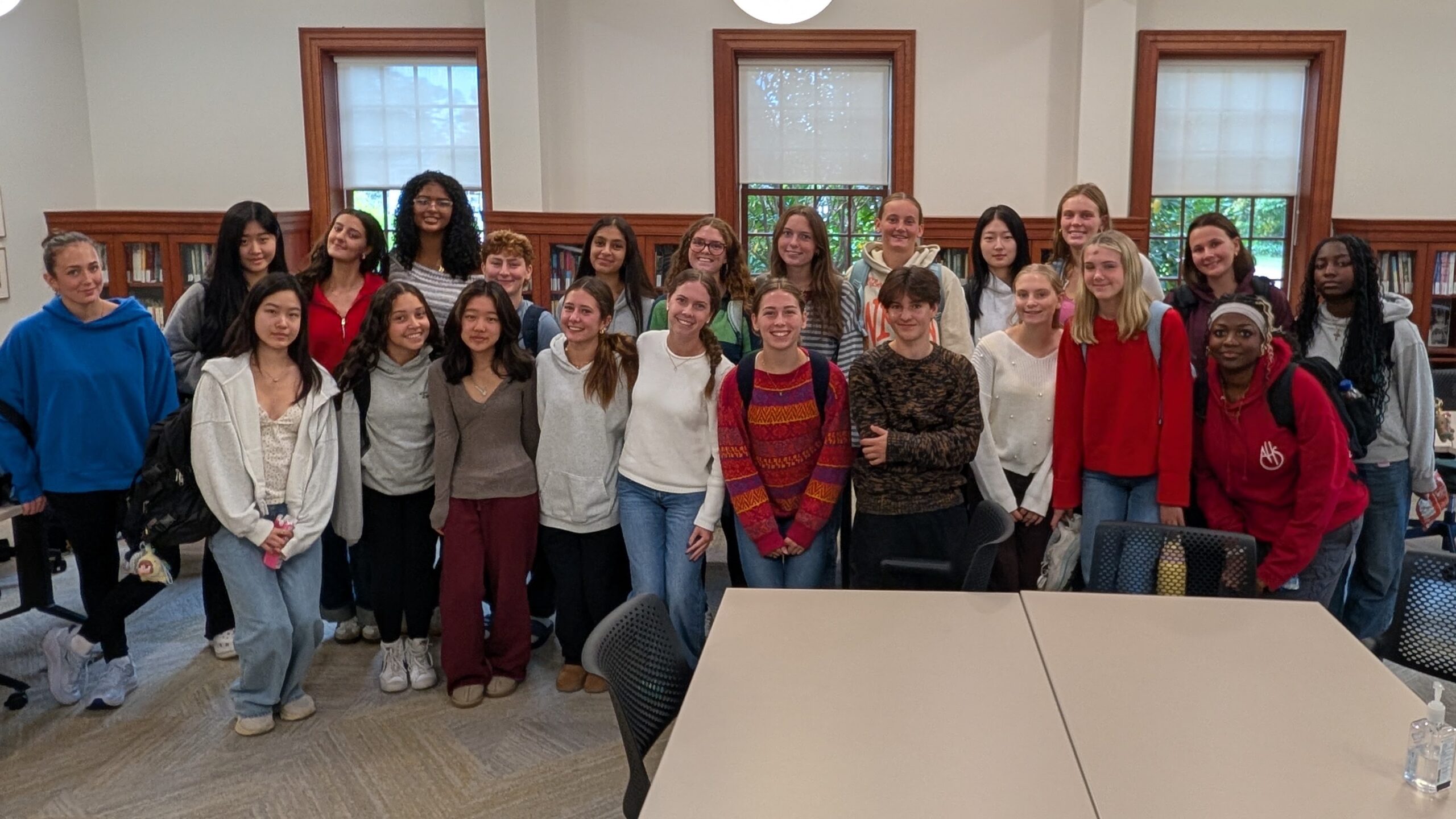
Relevance, choice, and voice. These were our guiding principles in selecting books for Porter’s students to read this past summer. We started by meeting with a group of students to listen to their voices as we collectively identified relevant themes. Two jumped out – democracy and technology. There is no doubt that these two things are on students’ minds. They are deeply concerned about the future they are inheriting and looking for ways to make positive change.
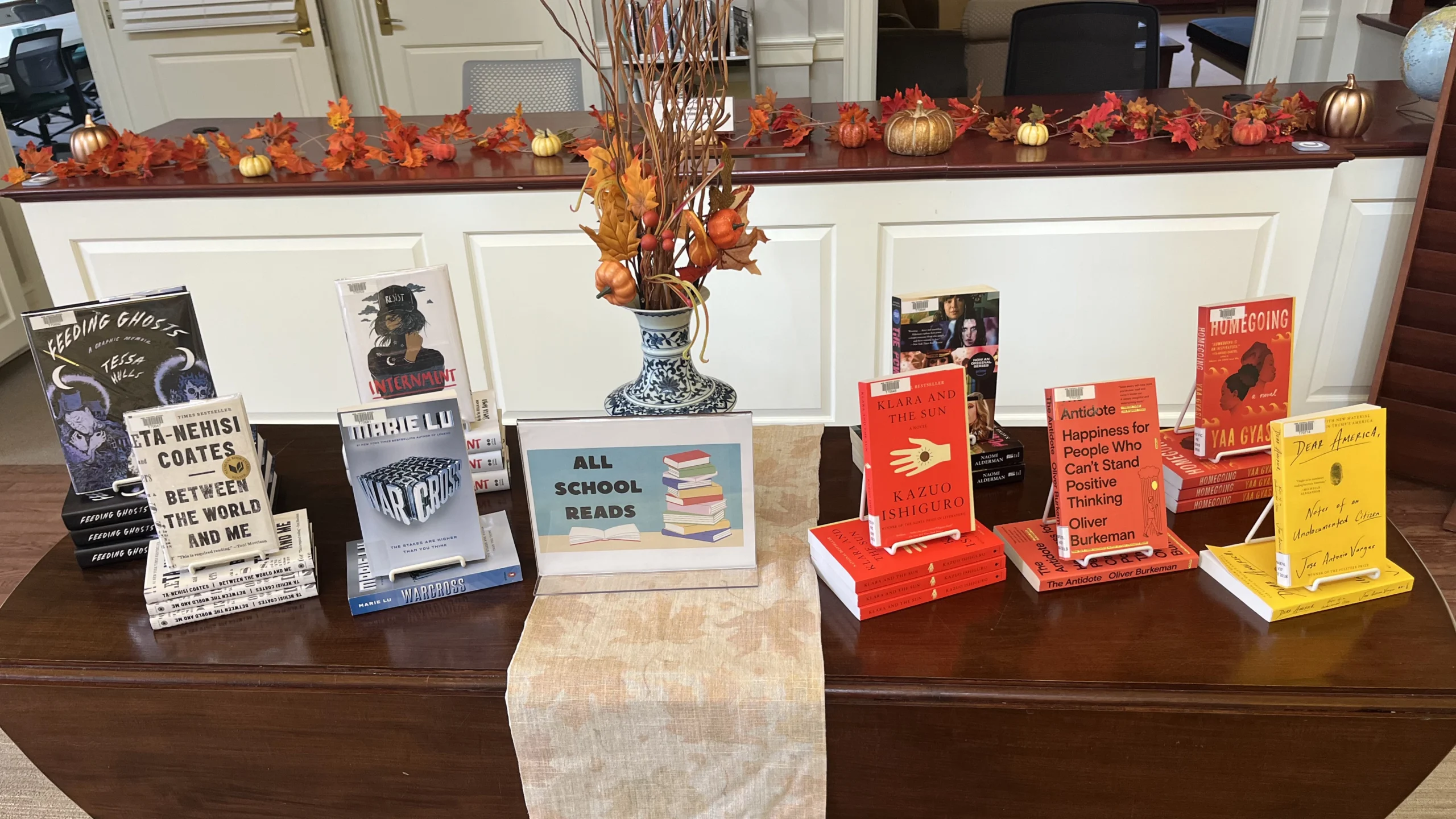
We then solicited specific suggestions through a schoolwide survey, and with data in hand, reconvened the group for one more discussion before making final selections. Though it is always a tradeoff between providing choice and having a common reading experience, the students argued powerfully for choice, and we listened. We crafted more detailed descriptions of the themes and selected four books (two fiction and two nonfiction) for each theme. Here’s where we landed:
Humans & Machines: Navigating the Age of AI
Artificial Intelligence · Ethics · Identity · Mental Health
- “Warcross” by Marie Lu
- “Klara and the Sun” by Kazuo Ishiguro
- “The Antidote: Happiness for People Who Can’t Stand Positive Thinking” by Oliver Burkeman
- “Feeding Ghosts” by Tessa Hulls
The Fragile Experiment: Democracy, Dissent, and Dialogue
Political Polarization · Citizenship · Civil Discourse · Anti-Democratic Movements
- “Internment” by Samira Ahmed
- “Homegoing” by Yaa Gyasi
- “Dear America” by Jose Antonio Vargas
- “Between the World and Me” by Ta-Nehisi Coates
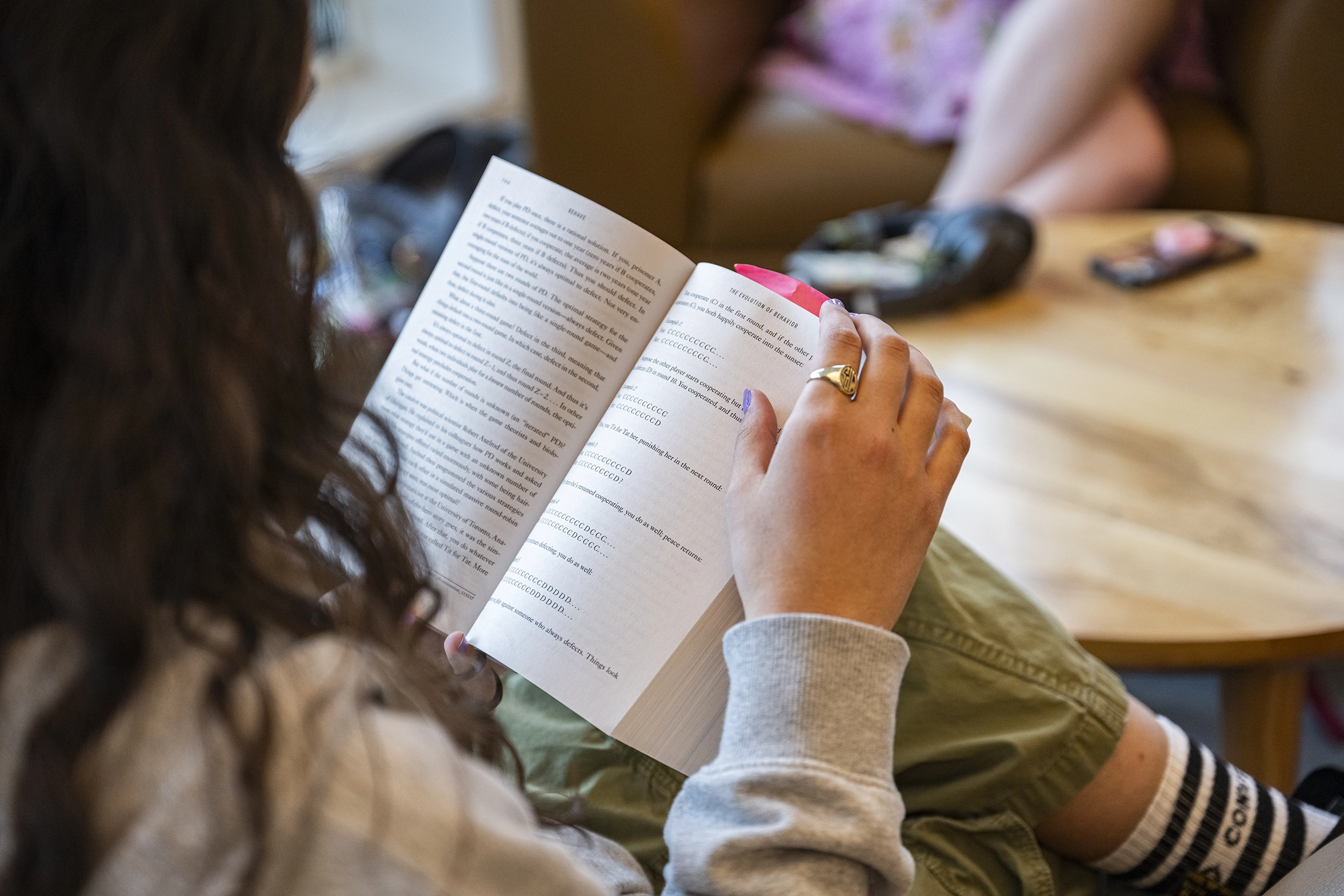
Students were asked to select any two books from the list of eight. The results of this experiment, particularly in terms of relevance, voice, and choice, were powerful. Rather than viewing the summer reading as an obligation, students were excited about it and talking with each other about what they would read. I’d be naive to assume that every student completed their summer reading, but many returned to school having read more than was required and eager to discuss what they had read with me and their peers.
In the spirit of highlighting student voice, here are some quotations from students about their summer reading:
“Reading “Internment” by Samira Ahmed and “Dear America” by Jose Antonio Vargas has inspired me to think deeply about how we respond to injustice and how silence, or simply giving up, allows oppression to grow stronger. Both books showed me how fragile freedom can be when fear and prejudice dominate. They also highlighted the power of ordinary people, especially young people, speaking out and making change.”
“Reading both books [“Klara and the Sun” and “Feeding Ghosts”] together inspired me to want to learn more about how people preserve humanity, whether by confronting family history honestly or by making sure we don’t lose our capacity for empathy in a world increasingly shaped by technology.”
“By reading “Klara and the Sun” and “Between the World and Me” together, I feel like I’ve experienced a full sense of time: past, present, and future. “Between the World and Me” taught me how the weight of the past continues to shape the present. “Klara and the Sun” offered a glimpse into a possible future shaped by AI, but it also reminded me that real connection happens by being fully present with one another. Taken together, these books encouraged me to treat each moment as meaningful by being more intentional and present, so that when I look back on the present in the future, I can feel confident that it had a lasting, positive impact.”
It was remarkable to learn from the connections students made between the books that they had read and inspiring to listen to the ways their reading has motivated them to take control of their lives and work to shape the future in positive ways. After all, democracy and technology are not two separate themes, but two forces in our world that are now inextricably linked in ways that can either help us or harm us. It is up to us to decide, and it gives me hope to know that many of our future leaders making these decisions will be graduates of Miss Porter’s School.
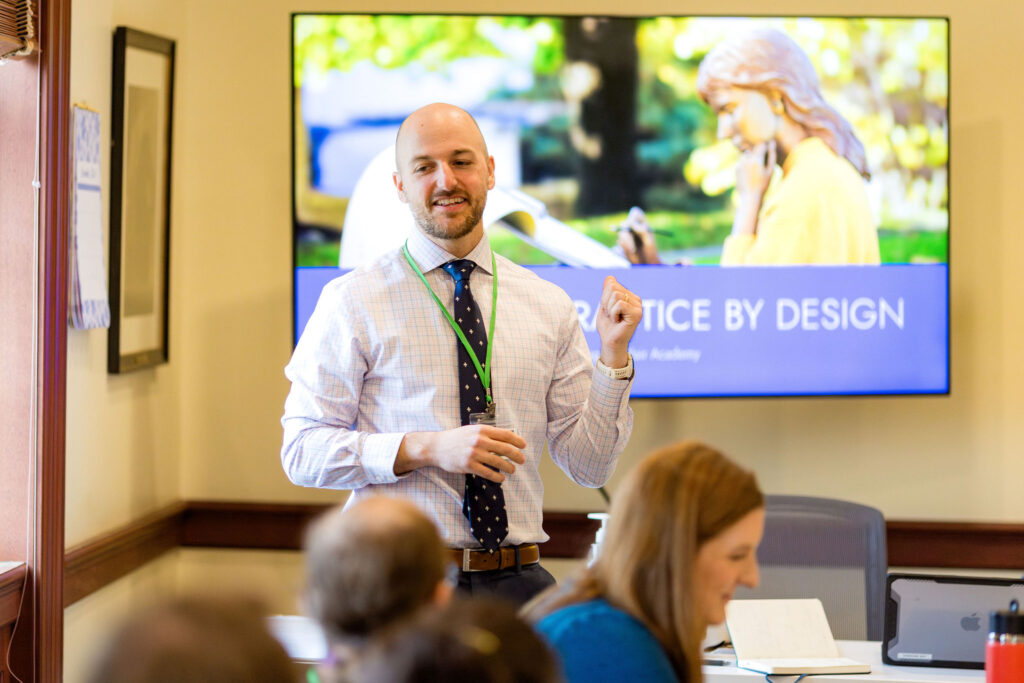
We also provided choices for faculty, asking them to select one of five texts. They were all excellent, but I want to highlight two. The first is Ethan Lollick’s “Co-Intelligence: Living and Working with AI.” Mollick provides an exceptional overview of the power of AI, both the terrific and the terrifying, predictions of what the future may hold, and sound advice for how we should interact with it. He argues that we should always “invite AI to the table” while acknowledging the critical step of always being “the human in the loop.” AI can help us, but it works better when we oversee it carefully. His section on “AI as Tutor” makes plain the enormous possibility of AI to promote learning if used by students as a tutor, as opposed to a tool to do their work. Our job as teachers is to use it to support learning in any way we can, which means bringing it to the table and working to assure students are using it in a way that supports their learning. We have our work cut out for us!
The second book that I wish to highlight is Yoshino and Glasgow’s “Say the Right Thing: How to Talk about Identity, Diversity, and Justice.” While this book was published in 2023, before the current pushback against talking about these things at all, it is now even more important because of the way in which these conversations have been curtailed. It is not only acceptable, but important that we have disagreements on issues related to identity, diversity, and justice. These are conversations that are essential to a democratic society, and Yoshino and Glasgow provide clear and accessible guidelines for having what they refer to as “impossible conversations.” They talk through scenarios in which it becomes clear that with the right combination of resilience, curiosity, respect, and authenticity we can talk about these topics which some wish to deem taboo.
I am proud to work at an institution that values reading and that promotes books by a diverse set of authors offering different perspectives on critical issues in our world. It is my personal opinion that in recent years, we have seen censorship of voice and ideas on both ends of the political spectrum. This is something we must not stand for, whether it comes from the right or the left. Further, the ability to read books is not just a right. For democracy to function, reading is an obligation and a responsibility. So I will close with a quotation from poet Joseph Brodsky that I share every year with our summer reading list: “There are worse crimes than burning books. One of them is not reading them.”
Follow us on social